From planning to construction.
Infrastructure projects serve social and economic objectives. For them to be successfully implemented, planning certainty must be reconciled with the legitimate interests of those affected. This is precisely where we see our role: turning those affected into stakeholders.
Discover our services
At the same time, they affect private property rights and rights of use. Our aim is to bring project developers and stakeholders together within a reliable process, to understand different perspectives and to respectfully take legitimate interests into account. In this way, we combine planning certainty with the protection of property and play our part in a joint infrastructure project.

In the case of linear infrastructure projects, matters relating to rights of way are characterised by numerous interdependencies. Changes to plans, incomplete or contradictory data, unresolved ownership and inheritance issues, as well as lengthy processing times at government departments and in the courts, can make acquiring legal rights considerably more difficult. Added to this are complex intersection and authorisation procedures, as well as the differing interests of the affected owners and right-holders. If these issues are not addressed on an ongoing basis, agreements must be finalised under considerable time pressure. Conflicts can escalate and necessary supporting documentation may be missing. On linear construction sites in particular, interruptions incur high costs because staff, equipment and construction processes cannot be utilised continuously.
Our contract managers, rights acquisition specialists and data and document managers work in close collaboration. A strong back office, a field service operating nationwide, and our own experts and lawyers enable us to assemble project teams tailored to specific needs and to process even large volumes of cases on an ongoing basis. Defined quality standards, regular training and coordinated reporting ensure that processing statuses remain transparent and results traceable, whether in our own systems or directly in those of our clients.
Defined work processes, standardised contract and document templates, fixed documentation standards, regular training sessions and specialist quality controls form the common framework for project management.
At the same time, systems, roles, approvals and reporting procedures are tailored to the requirements of the respective client.
Do you have any questions about quality management and quality standards?

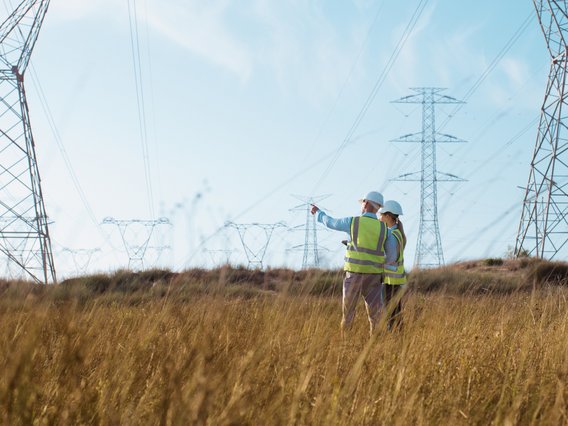
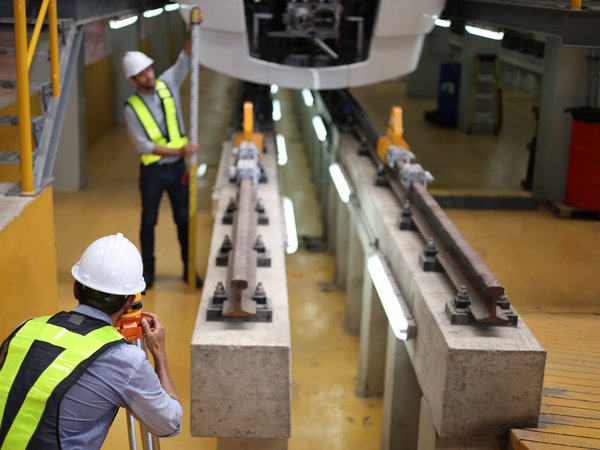
We support infrastructure projects right from the planning and approval stages and establish the legal framework required for their implementation. Our range of services extends from securing the necessary preparatory work and identifying stakeholders and landowners, through the acquisition of rights and the management of road junctions and planning permissions, to providing legal support throughout the construction phase. Our services are aimed in particular at transmission and distribution network operators, gas and hydrogen network operators, municipal utility companies, road, rail and track network operators, public project developers, and planning and construction companies. Among other things, we support projects in the fields of overhead power lines, underground cables, gas, hydrogen, heating, telecommunications, roads, railways and geophysical survey campaigns. Depending on the task at hand, we act as specialist partners to manage all land and right-of-way matters for an entire project, put together complete project teams or provide individual specialists and experts.
These four interlinked service areas form the basis for ensuring that land and rights are available in a timely manner throughout the planning and construction phases. The areas of specialisation illustrate the breadth of our expertise; the specific scope of services is agreed on a project-by-project basis.

We provide support throughout the planning and approval stages from a road law perspective and secure the rights of access and use required for surveys, measurements and other preparatory work.

We review the available information on land parcels and interested parties and carry out research to identify any missing details regarding owners and authorised users. The results are documented in a structured manner within the relevant project and client systems.

We handle communication with all parties involved, as well as the drafting, processing and monitoring of the necessary agreements. These include, amongst other things, authorisations, planning permission, easements, compensation agreements and land acquisition.

We coordinate the necessary agreements and approvals with public authorities, land-use authorities, infrastructure operators and other stakeholders. Conditions, deadlines and the status of processing are documented and reported in a transparent manner.

During the construction work, our staff on site are available to answer any queries relating to road regulations. They coordinate additional land requirements, deviations, complaints and claims, as well as the handover of land and any necessary follow-up safety measures.
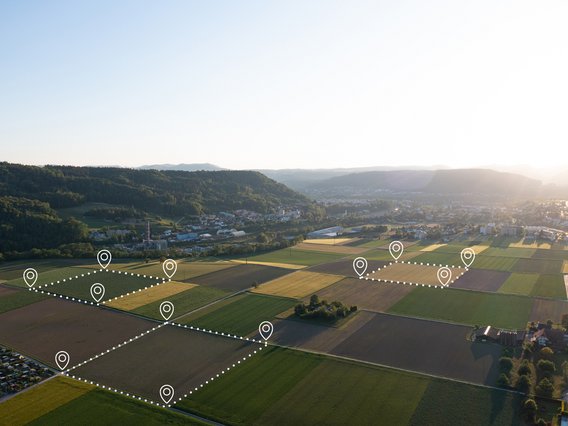
To lay the groundwork for acquiring legal title, we verify and complete information on land parcels and interested parties, investigate even complex ownership structures, and consolidate documents, maps and GIS data into a transparent project database. This ensures that even large volumes of data remain transparent and manageable.
For us, a comprehensive and reliable database is essential for the successful acquisition of legal title. As a rule, we take on planned routes with the cadastral parcels already defined – in some cases whilst the project is still in the approval phase. Existing details regarding owners and beneficial owners are checked, supplemented and unambiguously assigned to the relevant land parcels and transactions. We trace missing parties via publicly accessible sources, land registry and registration authorities, and, where necessary, on site. Even complex ownership, inheritance and representation arrangements are handled in consultation with the relevant probate and guardianship courts. We document the results in land acquisition registers or directly within our clients’ systems. Paper-based documents, digital maps and GIS data are consolidated into a traceable project database. Even large volumes of data from various sources can thus be processed in a structured manner and managed transparently through coordinated reporting.
We support the owners and authorised users involved from the initial contact right through to the conclusion of the transaction and the finalisation of the necessary agreements. In doing so, we combine personal communication, expert negotiation and comprehensive documentation.
Infrastructure projects require access, usage and ownership rights to be reliably secured at an early stage. We handle communication with the relevant landowners, licence holders, local authorities, companies and other stakeholders, and support the entire process of acquiring these rights. Our services range from access and building permits, through authorisation, usage and compensation agreements, to easements and land acquisition. We draft and amend project-specific contractual documents, conduct negotiations in writing, by telephone and in person, and document all contacts, feedback and agreements. Requests for amendments are clarified, incoming documents are reviewed and outstanding matters are consistently followed up. Where required, we support the process right through to notarised settlement, land registry entry and the payment of agreed compensation. Our project teams are supported in complex matters by our in-house lawyers as well as experts from the fields of agriculture, forestry and land management.
We coordinate the necessary agreements and approvals for road junctions, protected areas and other spatial considerations. In doing so, we combine structured process management with technical, environmental and surveying expertise.
Linear infrastructure projects cross roads, railway lines, watercourses, utility lines, public paths, private land and numerous other facilities. In addition, landscape, nature, water and groundwater conservation areas, Natura 2000 sites, ongoing construction projects, routes already undergoing the approval process and land consolidation areas may be affected. Based on the planning data provided, we handle the relevant crossing and authorisation procedures. We liaise with operators, responsible authorities, public bodies and other stakeholders, compile the necessary documentation and oversee the processes through to agreement or authorisation. This includes, amongst other things, crossing agreements, special-use permits, and procedures relating to road, railway, water, nature conservation and forestry legislation. Deadlines, feedback, conditions and processing statuses are documented in a transparent manner and reported on a regular basis. Our project teams draw on technical expertise gained from many years of planning linear infrastructure and both open and enclosed junction structures. Where planning services are also provided within the DMT Group, the necessary interfaces can be coordinated internally.

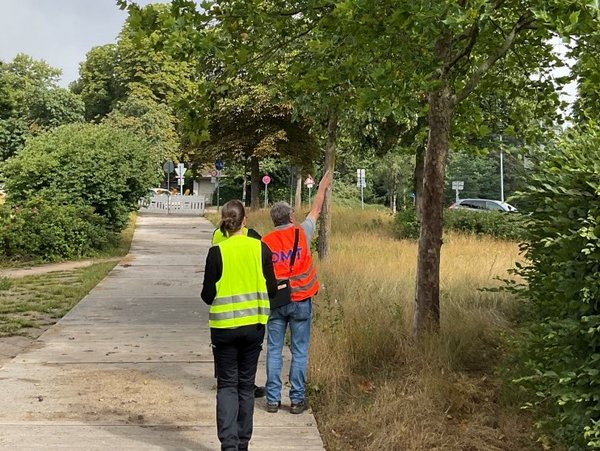
We manage road-related matters directly on site. Our staff coordinate additional space requirements on site, act as points of contact for those affected, and ensure that any deviations, damage and agreements are dealt with in a transparent manner.
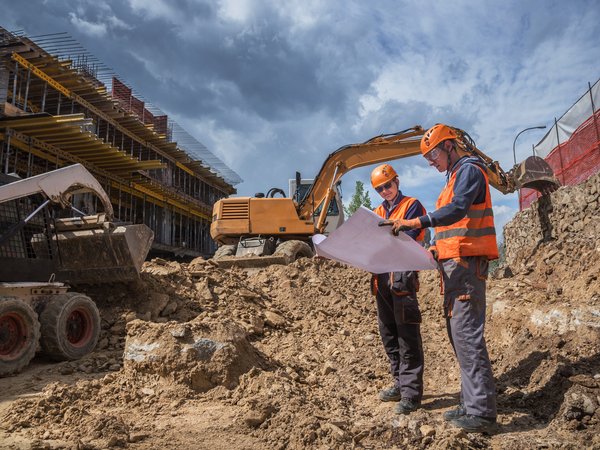
In the case of large-scale linear infrastructure projects, construction work often begins on the first sections whilst the standard process of acquiring rights is still ongoing in other areas. Construction supervision under road legislation focuses on those sections for which the necessary rights have, in principle, already been secured and where concrete construction work is being prepared or has already commenced. Our staff are present on site and act as the road-law liaison between the project developer, construction companies, landowners and authorised users. They keep all parties informed, coordinate access routes and workspaces, and deal with road-law issues arising from the ongoing construction work. If additional access routes, storage areas or work areas are required, we draw up and secure the necessary agreements. Deviations from existing agreements, conflicts over use, complaints, as well as damage to land and other construction-related damage are recorded and documented. Depending on the task at hand, our staff either carry out the damage assessment themselves or coordinate external experts and surveying services.

DMT as a partner for land management
As specialist partners, we support project developers in handling land and right-of-way matters in a structured and reliable manner. To this end, we combine scalable project structures, a nationwide presence, specialist expertise and professional data management.
Land and right-of-way services from a single source
Scalable project teams
In-house expertise
Nationwide on-site presence
Mastering data and processes
Interdisciplinary within the DMT GROUP
For technical and interdisciplinary issues, we draw on further expertise within the DMT GROUP. This includes, in particular, the design of linear infrastructure and junction structures, environmental planning and surveying.
Together, we will determine what skills and resources your project requires.
Stefan Fuhrberg
Project Management and Client Development
stefan.fuhrberg@dmt-group.com
Phillip Chlebig
Head of the Property, Junctions and Permits Department
phillip.chlebig@dmt-group.com