Wasserstoff-Kompetenz für Industrie, Kommunen und Regionen
Hydrogen
Get in touch now and launch a hydrogen project with DMT!Get in touch now and launch a hydrogen project with DMT!
Hydrogen
Get in touch now and launch a hydrogen project with DMT!Get in touch now and launch a hydrogen project with DMT!Hydrogen projects combine technical, regulatory and economic requirements. DMT supports you throughout the entire value chain: from production and infrastructure, through transport, storage and distribution, to applications in industrial processes, mobility, and buildings and neighbourhoods.
Our experts assess technical and economic feasibility, develop robust concepts and plan the implementation of your project. In doing so, we take into account site-specific conditions, regulatory requirements, safety standards, energy needs and funding opportunities right from the start.
We support you from the initial project idea right through to the implementation phase. This includes feasibility studies, technology and site assessments, economic viability analyses, permit management and assistance with funding applications. In this way, we create a sound basis for decision-making and ensure efficient, predictable project processes.
Benefit from the expertise of the TÜV NORD GROUP, where experts from DMT, TÜV NORD, DMT ENCOS and DMT ENERGY ENGINEERS specialise in all aspects of hydrogen.

Dr. Thomas Kattenstein
Managing Consultant, DMT ENERGY ENGINEERS
Manager Competence Center Hydrogen
+49 171 3319026
Viele Industrieprozesse lassen sich nicht allein durch Elektrifizierung dekarbonisieren. Insbesondere in den Bereichen Stahl, Chemie, Raffinerie, Zement sowie bei industriellen Hochtemperaturprozessen oder der Schwerlastmobilität wird Wasserstoff künftig eine wichtige Funktion übernehmen.
Unternehmen profitieren von einer frühzeitigen Integration von Wasserstofftechnologien durch:
Darüber hinaus eröffnet Wasserstoff neue Möglichkeiten für die Kopplung von Energie-, Produktions- und Logistiksystemen. Unternehmen können Energie künftig flexibler nutzen und ihre Versorgung unabhängiger von fossilen Energieträgern gestalten.
From production to application – DMT supports you with its expertise throughout the entire hydrogen value chain.
Solutions for a regional hydrogen economy
Hydrogen as an opportunity for regions and local authorities. DMT taps into the potential of H2, initiates and supports projects, and thereby creates sustainable value for local stakeholders and businesses.
Hydrogen: Opportunities and challenges for municipal utilities
Hydrogen as the basis for a climate-neutral energy supply. DMT is developing new business models for existing assets by retrofitting gas networks or economically integrating new plants and processes.

A successful entry into the hydrogen industry
DMT supports businesses and industry through transformation processes and develops projects across the value chain: from a robust feasibility study on the design of hydrogen production and infrastructure right through to application. With technological expertise and quality.
Our H2 expertise to ensure your project runs smoothly
DMT acts as the central point of contact for all regulatory requirements. This reduces the need for internal coordination, minimises risks and speeds up the process from the initial project idea through to successful approval and commissioning. This ensures a high degree of planning certainty and cost-efficiency.
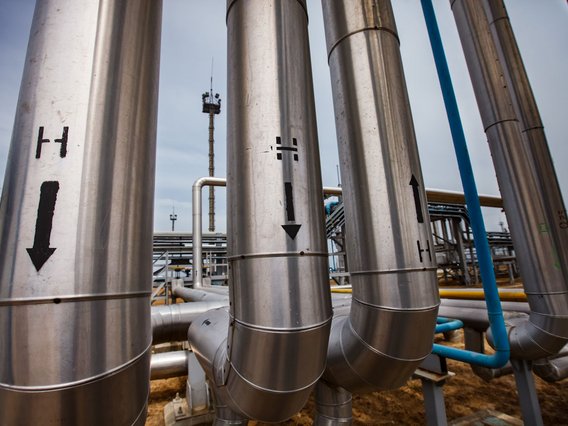
Hydrogen solutions for industry and businesses
Would you like to know what role hydrogen could play in your business? Drawing on our technical knowledge and expertise, we will assess how your business can benefit from the supply of electricity and process heat – for example, through combined cycle gas turbine power stations or hydrogen burners – or from the use of hydrogen as a feedstock.
In many energy-intensive industrial processes, CO₂ emissions cannot be reduced through electrification alone. Hydrogen can replace fossil fuels and help companies achieve their climate targets and create sustainable value.
Hydrogen acts as a flexible energy carrier and energy storage medium. It enables the storage of renewable energy, enhances security of supply and links the energy, industry, mobility and heating sectors.
Fuel cell technology:
Hydrogen is used in fuel cells to generate electrical energy. This technology plays a particularly important role in the transport sector, as it enables vehicles to operate with low emissions or, in some cases, with no local emissions. In addition, fuel cells are also used in stationary applications to generate electricity and heat.
Direct reduction in the steel industry:
In steel production, hydrogen can be used as an alternative reducing agent. This reduces the use of carbon-containing materials such as coke or coal, leading to significantly lower CO₂ emissions.
Use in chemical production:
Hydrogen is an indispensable raw material for the chemical industry. It is required, for example, for the production of ammonia, methanol and other chemical intermediates and end products.
Use for energy generation:
Hydrogen can be used in specially adapted gas turbines or in combination with natural gas to generate electricity. This opens up flexible applications with comparatively low emissions. However, the conversion of electricity into hydrogen and its subsequent reconversion into electricity is associated with considerable energy losses. Furthermore, depending on the technology used, nitrogen oxides (NOₓ) may be produced during combustion. Hydrogen is therefore particularly suitable as a backup or supplementary solution, as well as for specialised applications, but less so as a permanent primary source of electricity generation.
Storage of renewable energy:
Surplus energy from wind and solar power plants can be converted into hydrogen via electrolysis and stored. If required, this stored energy can be used to supply electricity at a later date, for example when current generation from renewable sources is insufficient.
Provision of process heat:
In industrial plants, hydrogen can be gradually blended with existing fuels. This enables energy-intensive sectors to gradually reduce their use of fossil fuels and prepare for the transition to widespread hydrogen use.
Mobility
Hydrogen offers particular advantages where long ranges, short refuelling times and large amounts of energy are required. Whilst battery-electric powertrains demonstrate their strengths primarily in passenger car transport and over short to medium distances, hydrogen can serve as a useful complement for applications with high performance requirements, such as heavy goods transport and logistics, bus fleets in local public transport, rail transport on non-electrified lines, port and terminal logistics, construction and specialised vehicles, as well as parts of the shipping and aviation sectors, as a sensible complement.