Safety and Incident Analyses
Safety and incident analyses combine technical expertise with a systematic assessment of risks to ensure safe operations.
Request consultancy on nuclear engineering from DMT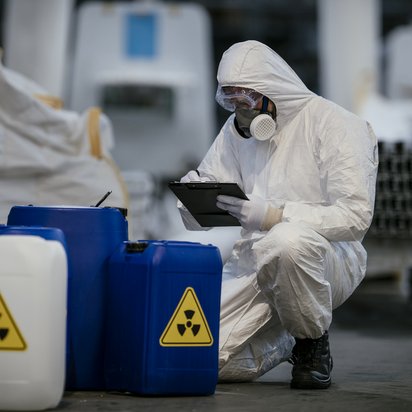
Safety and incident analyses combine technical expertise with a systematic assessment of risks to ensure safe operations.
Request consultancy on nuclear engineering from DMTEnsuring the safety of technical systems and operational processes is a key prerequisite for the safe handling of radioactive materials. Safety and accident analyses provide the basis for systematically identifying risks, deriving requirements for systems and components, and assessing operational procedures. The focus here is on technical, organisational and human factors alike.
DMT supports operators and responsible authorities in carrying out comprehensive safety analyses in accordance with nuclear regulatory frameworks. Our approach takes into account not only technical systems and components, but also operational procedures and their interactions. In this way, we lay the foundations for safe operation, the minimisation of potential impacts, and structured integration into procedures governed by nuclear and radiation protection legislation.

Safety analyses serve to identify requirements for systems, components and processes at an early stage and to derive them in a transparent manner. DMT develops structured assessment approaches for nuclear facilities and other areas of application involving the handling of radioactive materials.

As well as technology, operational processes also play a key role in determining a system’s safety. We therefore systematically analyse processes and identify opportunities for optimisation within the organisation, in the interaction between people, technology and the organisation, and at the interfaces between individual process steps.
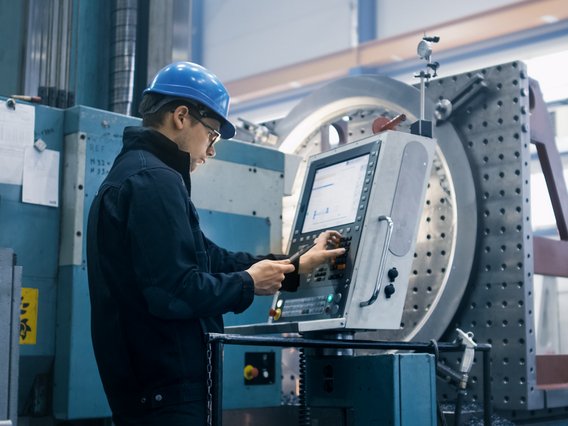
Accident analyses help to systematically assess potential incidents and their consequences. DMT examines scenarios based on technical or human error, whilst taking into account the effects of rock mechanics.
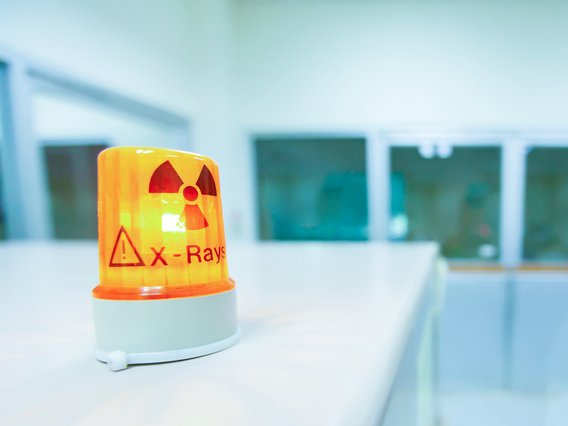
A key component of safety assessments is the identification of possible release pathways for radioactive substances. We analyse potential dispersion and impact pathways, thereby laying the foundations for protective measures and regulatory documentation.

Safety and accident analyses are closely linked to statutory and regulatory requirements. DMT provides support with the technical interpretation and implementation of relevant requirements, for example those set out in the Atomic Energy Act, the Radiation Protection Act or specialised regulations such as the Ordinance on Safety Requirements for Final Repositories.

Nikolai Hentrich
Nuclear Engineering
+49 160 888 4647

Such an analysis is generally required when radioactive materials are handled, safety-critical technical systems are operated, or regulatory evidence must be provided as part of procedures under nuclear legislation or radiation protection legislation. A new analysis may also be necessary in the event of changes to facilities, processes or boundary conditions.
No. Safety and accident analyses require specialist knowledge in the fields of engineering, radiation protection, regulatory requirements and risk assessment. Furthermore, experience in the methodical implementation of such analyses and in interpreting regulatory requirements is essential.
Generally speaking, no. Existing analyses can serve as an important basis, but they must be adapted to the relevant technical, organisational, location-specific and regulatory conditions. This applies both within Germany and in an international context.
Yes. Depending on the application and the type of facility, various statutory and regulatory requirements must be taken into account, such as those set out in the Atomic Energy Act, the Radiation Protection Act or specialised safety regulations. The specific relevance depends on the project and the scope of application.