Geotechnical Engineering in Mining & Numerical Modelling
Geotechnical data, modelling and independent consultancy for safe and cost-effective mining projects.
Request advice on geotechnical engineering in the mining sector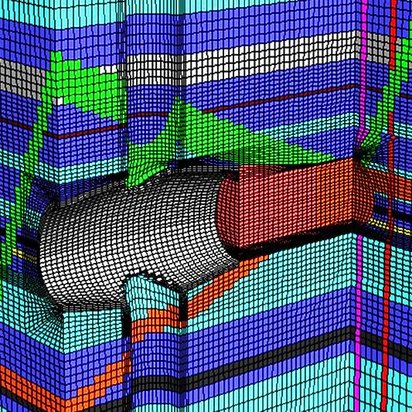
Geotechnical data, modelling and independent consultancy for safe and cost-effective mining projects.
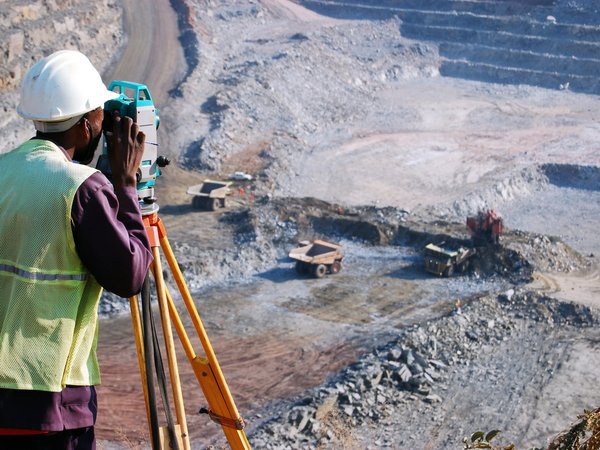
Request advice on geotechnical engineering in the mining sectorOur services offer you comprehensive support in the collection and analysis of geotechnical parameters, from sampling through to quality control. We plan and supervise geotechnical exploration programmes to ensure that your projects are built on solid foundations.
We combine the mapping of geological structures, geotechnical rock mass assessment and geotechnical modelling to produce analyses that support your decision-making processes. In addition, we process geological and geotechnical data for further analysis and carry out stability analysis audits in active mining projects.
DMT employs tried-and-tested and state-of-the-art numerical methods for these purposes, supplemented by specialised in-house developments and suitable software solutions.
Among other things, we analyse mining methods, support configurations, void dimensions, stress states, settlements and slope stability. In doing so, we also take into account time-dependent factors such as creep processes, thermal couplings and the ageing behaviour of concrete. On this basis, we support you with feasibility studies, optimisations, risk analyses and the validation of existing models.
Our programmes are specifically tailored to your requirements and optimally adapted through the combination of various software solutions. Whether 3D or 2D, continuum or discontinuum: DMT offers the right solution for your specific problem. Taking time-dependent factors, such as creep processes or thermal coupling, into account significantly broadens the range of possible problems that can be addressed. With a wide range of constitutive models, from tried-and-tested approaches such as Mohr–Coulomb and Hoek–Brown to innovative new developments, we can accurately simulate real-world behaviour.
Dr Lucy Schlicht
Natural Resources/Geomechanics
+49 201 172 1967
Please get in touch with us to discuss your geotechnical requirements. Together, we will develop robust, efficient and project-specific solutions for your mining operations.
Geotechnical engineering in mining involves the collection, analysis and assessment of geological and geotechnical data. This includes, amongst other things, field and laboratory investigations, geological mapping, rock mass assessments, stability analyses and geotechnical modelling. The aim is to establish a sound basis for the planning, operation and further development of mining projects.
Geotechnical investigations help to reliably assess the properties of soil, rock and mountainous terrain. They make it possible to identify risks at an early stage, validate planning assumptions and design measures specifically to ensure safety, efficiency and cost-effectiveness.
Depending on the project, the parameters include, amongst other things, strength, deformation behaviour, jointing, stress conditions, water conditions and geological structures. DMT supports the sampling process, the selection of suitable field and laboratory methods, and the quality control of the data collected.
A geotechnical rock mass assessment describes and classifies the quality and behaviour of a rock mass. Established systems such as the Rock Mass Rating (RMR), Q-Index or Geological Strength Index (GSI) may be used for this purpose. The results form the basis for determining geotechnical parameters, designing support measures and further modelling.
Numerical modelling uses computational methods to represent geotechnical relationships. It enables the analysis of various planning and operational scenarios, such as the effects of mining methods, void dimensions, support configurations or changes in stress within the rock mass.
Numerical models can be used, amongst other things, to assess structural stability, embankment and slope stability, settlement, stress distributions, zones of loosening and potential failure mechanisms. The design of anchors, concrete and shield linings, as well as the optimisation of excavation rates, can also be analysed.
Two-dimensional models are suitable for clearly defined, simplified problems and efficient parameter studies. Three-dimensional models provide a more detailed representation of complex spatial geometries, geological structures and interactions. The appropriate level of modelling detail depends on the objectives, the available data and the risk associated with the project in question.
Where necessary, we take into account time-dependent factors such as creep processes, thermal couplings, the material behaviour of concrete or changes in the stress state. This also enables us to assess long-term developments and their impact on structural stability.
A stability analysis assesses whether mine workings, embankments, slopes, shafts or other mining structures will remain stable under the given geotechnical conditions. It helps to identify risks and determine appropriate technical or operational measures.
DMT combines geological and geotechnical expertise with numerical modelling. We provide support for feasibility studies, exploration programmes, risk analyses, shaft and mine planning, development configurations and the validation of existing models. This creates a robust basis for decision-making to ensure safe and economically viable mining projects.