The best and most cost-effective fire protection for your buildings and facilities
DMT develops comprehensive security concepts to ensure the individual, efficient and legally compliant implementation of relevant statutory requirements and guidelines.
Request advice on your fire protection concept
As part of planning permission or environmental protection approval procedures, proof of compliance with fire safety requirements is generally provided by means of a site-specific fire safety plan, particularly in the case of special buildings such as:

Are you an operator or manufacturer in need of a fire safety plan for your project? Please get in touch – our fire safety experts look forward to hearing from you!
+49 (0) 231 5333-430


We draw up site-specific fire safety concepts (Stages 1 to 4 in accordance with AHO), technical fire safety reports and expert opinions, taking into account building regulations and the specific requirements of the building’s intended use. Whether for new or existing buildings, the aim is to integrate fire safety optimally into the desired overall design.
Through our vulnerability analysis, we identify any shortcomings in your security strategy and provide recommendations for improvement. This process takes into account both the operator’s specific requirements and the requirements of the regulatory authorities.
Target/actual comparison, due diligence, risk analysis – many different terms which ultimately all share a common focus: the identification and prevention of fire safety risks, and thus the avoidance of liability risks for those responsible.
We assist you in comparing the current condition of a building or facility with the approved specifications. In doing so, we establish a sound basis for discussions with the authorities, refurbishment measures or sales negotiations.
In operational areas subject to mining supervision, we carry out fire safety inspections in the above-ground areas.
Risk assessments for fire safety are required under health and safety legislation and regulations governing hazardous substances. The complexity is particularly high in the industrial sector. We can assist you in carrying out risk assessments – with a practical approach and protection strategies tailored to your specific needs.
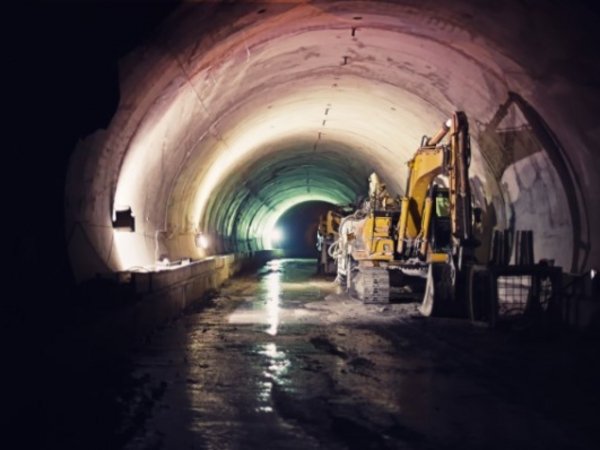
To determine the actual fire risk potential within a building, we rely on a systematic and reliable assessment. In addition to computer-aided simulation, we carry out real-world fire tests in collaboration with experts from TÜV NORD Systems GmbH & Co. KG. These are carried out, amongst other places, in specialised fire tunnels (25 and 70 metres long), where large-scale fire tests with a heat output of up to 30 MW can be conducted under realistic conditions. In this way, the spread of fire and smoke can be determined under authentic conditions.
We assist in reconciling the requirements set out in the fire safety documentation (usually the fire safety concept) and the planning permission with the results of the detailed design, in order to avoid unnecessary iterative design stages.
We check that the necessary fire safety equipment has been installed correctly and that relevant regulations are being complied with, in order to avoid costly retrofitting work at a later stage.
We provide external fire safety officers for your organisation. The fire safety officers carry out regular on-site inspections to check that fire safety requirements are being met during day-to-day operations and to advise the operator on their implementation.
We draw up the necessary planning documents in accordance with the applicable regulations and official requirements, and check that they are up to date
In order to be able to act and react appropriately in an emergency, it is essential to run through potential scenarios in advance and to devise, document and practise the necessary action plans and strategies as part of a systematic approach to risk management. We draw up evacuation plans tailored to your needs and support you throughout their implementation. We plan the organisation of drills in consultation with you.
Fire cause investigation involves a forensic examination of the scene of the fire, during which evidence is scientifically examined, documented and analysed. In close collaboration with TÜV NORD Systems GmbH & Co. KG, we provide experts for fire cause investigation. Following a fire incident, it is important to contact a fire investigation expert at an early stage, as evidence at the scene of the fire may deteriorate or be altered. Our fire cause investigation experts work on behalf of law enforcement agencies (criminal investigation departments, public prosecutors’ offices), federal authorities, insurance companies and industrial clients, and can be reached round the clock on +49 231 5333-399.
Based on the findings of the fire investigation, we support our industrial clients in optimising their fire safety measures to prevent or reduce future fire damage.
Working closely with our sister company, TÜV NORD System, you can have fire safety tests carried out on building components and materials.
Working in close collaboration with our sister company, TÜV NORD System, we provide inspection services for technical systems and installations (e.g. fire-extinguishing systems, fire-alarm systems, ventilation systems, smoke extraction systems and electrical installations).
Please use our contact form to send us your enquiry directly. Our experts will get back to you as soon as possible.
In North Rhine-Westphalia, a fire safety plan is required as part of the building documentation for every planning application for a large special-purpose building (see Section 50 of the North Rhine-Westphalia Building Regulations 2018). In other federal states, fire safety plans are not regulated by law, but may be required by the planning permission authority for special-purpose buildings.
In some federal states, the term ‘fire safety certification’ is used alongside that of ‘fire safety concept’. Unfortunately, there is no standardised definition of either term. Both documents essentially serve the same purpose: to provide evidence of fire safety in the building permit process. In accordance with the building regulations of individual federal states, the fire safety certificate may also be provided in the form of a site-specific fire safety concept. It is therefore always necessary to consider the specific circumstances of each federal state.
In contrast to the fire safety concept and fire safety certification, a fire safety technical opinion generally serves only to examine a specific issue (e.g. the assessment of escape routes), without undertaking a holistic assessment of the property.
A fire safety expert report is usually drawn up by a fire safety expert in the context of legal proceedings in order to obtain an objective assessment from an independent specialist (e.g. regarding a necessary right of way to ensure escape routes and access routes for the fire service).

In North Rhine-Westphalia, fire safety plans may only be drawn up by the persons specified in Section 54 (3) of the BauO NRW 2018 (state-recognised experts for the assessment of fire safety, publicly appointed and sworn experts for preventive fire safety, or persons who, in individual cases, are comparably suitable for the task on the basis of their expertise and experience). In other federal states, there are no corresponding legal requirements. In such cases, the client must commission an expert suitable for the task in question. Naturally, in the other federal states, one of the experts mentioned above may also draw up a fire safety plan.
In the field of fire safety, site supervision (construction supervision) in service phase 8 of the HOAI is defined in terms of the standard services as set out in Booklet No. 17, ‘Services for Fire Safety under Building Regulations’, of the AHO series (2022):
In accordance with AHO Publication Series No. 17, site supervision (construction supervision) in the field of fire safety can be divided into three levels:
Specialist fire safety site management corresponds to Level 2 as an optional service and is generally deemed sufficient by the AHO publication series, Issue No. 17, for special-purpose buildings.
Level 3 is only carried out for specific projects, as the effort involved in testing all construction products and types, as well as in carrying out component tests—some of which are destructive—is still considerably greater than that required for the optional service.
Technical due diligence is a comprehensive, specialist assessment of the structural or technical condition of a property or facility, carried out to minimise risks, identify any repair requirements and determine the actual value before a transaction (purchase/sale) is finalised. In the context of fire safety, aspects such as the building’s structural integrity, building services and compliance with fire safety requirements under building regulations and planning permissions are analysed. Furthermore, the assessment of planned uses of the building can also form part of the fire safety due diligence and provide important information regarding a property’s potential for return on investment.