Defense Engineering & Consulting für resiliente Infrastruktur und sichere Versorgung
Resilience Matters. Making critical infrastructure secure and resilient.

Resilience Matters. Making critical infrastructure secure and resilient.
Critical infrastructure must continue to function reliably even in the event of disruptions and exceptional stresses. At the same time, the regulatory and technical requirements placed on its operators are increasing. The KRITIS Framework Act establishes a binding framework for the physical resilience of critical facilities. It requires operators of critical facilities to carry out risk analyses and assessments, as well as to implement resilience measures ranging from prevention and physical protection, through incident response and the mitigation of their impacts, to the rapid restoration of critical services.
DMT supports you in deriving specific resilience measures for facilities and infrastructure from the technical and security-related requirements of the KRITIS Framework Act and in implementing them technically. We analyse risks and vulnerabilities, plan and modernise infrastructure, develop solutions for a resilient supply, and monitor facilities and structures.
ISO 31000 and ISO 22301 provide complementary frameworks for risk management and business continuity. Whilst ISO 31000 addresses the systematic identification, assessment and treatment of risks, ISO 22301 aims to prepare organisations for serious business interruptions and safeguard critical services.
Our focus is on the technical implementation of resilience. To this end, we combine KRITIS consultancy with technical expertise in risk analysis and resilience concepts, natural hazards and geological risks, geotechnical engineering and structural integrity, engineering and plant design, plant and process safety, energy and supply security, monitoring, as well as damage analysis, protection and recovery.

Dr Paul Althaus
Head of Sales & Marketing & Head of the Defence Cluster, DMT GROUP
+49 201 172 1989
I look forward to hearing from you regarding critical infrastructure. Let’s discuss your project.
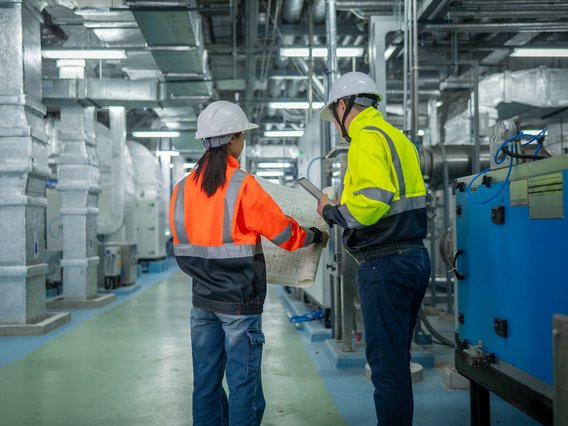
When carrying out a risk analysis of critical infrastructure, different types of hazards, threat scenarios, vulnerabilities, dependencies and potential cascade effects must be considered together. In line with the ‘all-hazards’ approach, DMT contributes its technical expertise to this assessment and examines critical facilities, infrastructure and sites. The results highlight where action is required and which technical resilience measures are appropriate.
Our services include, amongst others:
This enables us to support operators with the technical foundations for risk analyses, resilience measures and resilience plans within the context of the KRITIS Framework Act.
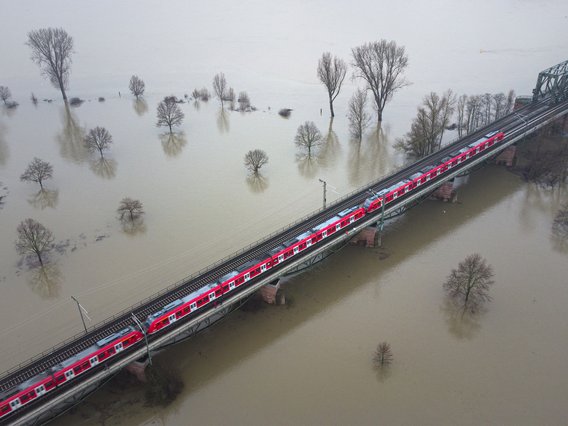
Floods, landslides, sinkholes or seismic events can have an immediate impact on critical infrastructure or jeopardise its stability and availability in the long term.
To investigate and assess such risks, DMT draws on its expertise in geology, geophysics, geotechnical engineering and hydrogeology, and uses this to develop appropriate protection and safety measures.
Our services include, amongst other things:
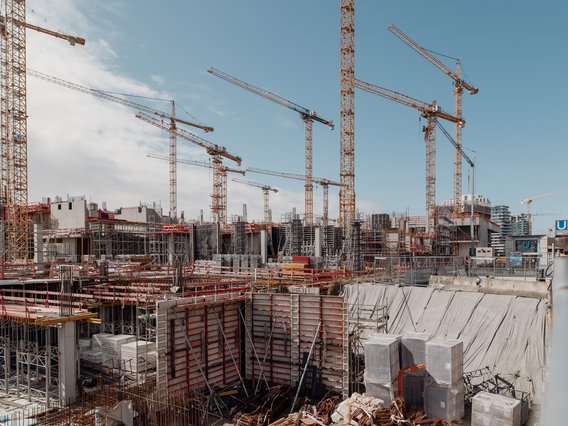
The building site and subsoil have a direct impact on the stability and serviceability of structures and infrastructure. Settlement, movement, insufficient bearing capacity or unknown underground structures can pose significant risks.
DMT investigates geotechnically challenging sites and structures, assesses the risks and plans appropriate safety and construction measures.
Our services include, amongst others:
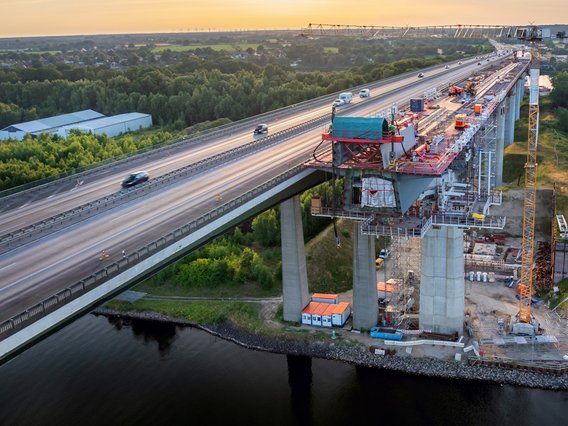
For new builds, extensions and modernisation projects, DMT handles the technical planning and implementation of infrastructure projects – from the initial assessment and feasibility study right through to construction, commissioning and optimisation.
Our services include, amongst other things:
Digital methods such as BIM, GIS, laser scanning and 3D as-built surveys can complement the planning, implementation and subsequent operation of projects.
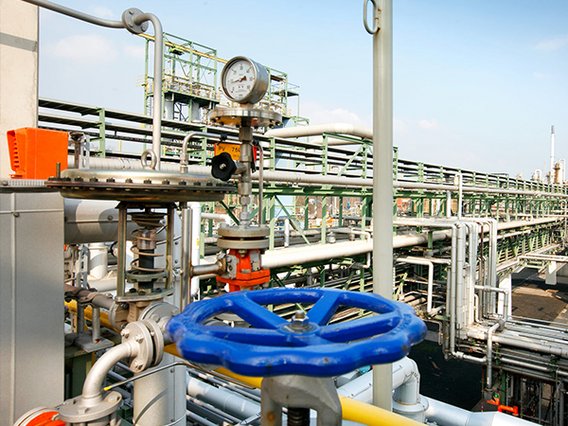
The safe operation of technical installations and processes requires the early identification and effective management of operational and process-specific hazards. DMT assesses these risks and develops suitable protection and safety concepts for existing and new installations.
Our services include, amongst other things:
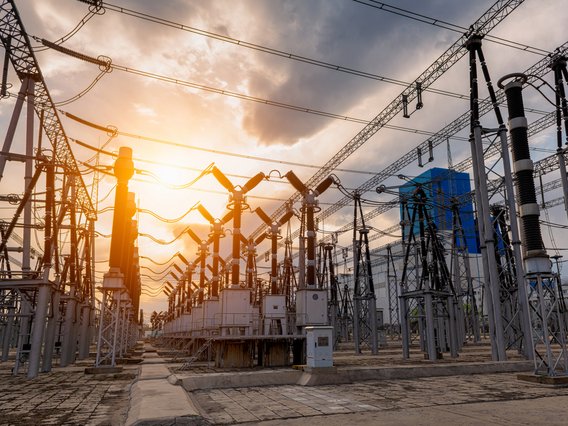
The availability of energy and other site-critical resources is an essential prerequisite for the reliable operation of critical infrastructure. Outages and one-sided dependencies can compromise the operational capability of entire sites.
DMT analyses supply structures, identifies critical dependencies and develops technical concepts for a more resilient supply system.
These include, amongst other things:
For companies and infrastructure reliant on raw materials, DMT can also analyse raw material requirements, supply chains and supply risks, and develop options for diversification and raw material efficiency.
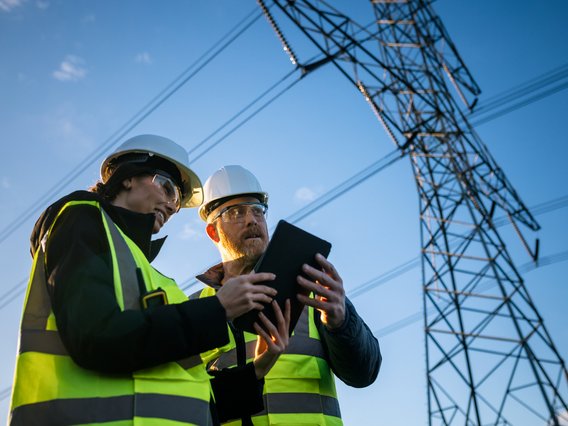
Identifying changes to plant and structures at an early stage enables targeted measures to be taken before availability or operation is affected.
DMT develops monitoring solutions for plant, machinery, structures and geotechnical systems – ranging from measurement technology and data acquisition to specialist analysis and assessment.
Our services include, amongst other things:
With Smart Inspection & Monitoring (SIM), it is also possible to assess the service life and inspection intervals of plant components and to plan maintenance measures in a more targeted manner.
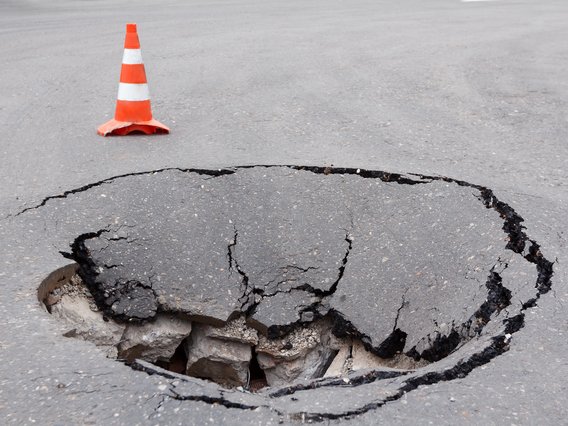
Technical resilience also involves dealing with damage and disruptions that have already occurred: the causes must be identified, the impact minimised and operational capability reliably restored.
In the event of damage or exceptional incidents, DMT provides support across a range of technical disciplines, depending on the task at hand.
Our services include, amongst other things:
DMT brings together expertise from a wide range of technical disciplines and infrastructure markets. We support operators, owners, public sector clients and project managers in the following areas, amongst others:
Power stations and other energy generation facilities, storage facilities, sector coupling, electricity and gas infrastructure, pipelines and other supply facilities
Drinking water and domestic water supply, wells, groundwater and surface water, water management facilities and the treatment of industrial effluent
Roads, railways, bridges, tunnels, waterways and other transport infrastructure
Chemicals, petrochemicals, pharmaceuticals, steel, energy and production facilities, as well as other technically demanding industrial and logistics sites
Mines, shafts and processing plants, as well as infrastructure for the storage, handling and transport of raw materials – including spoil heaps, warehouses, silos, caverns and tank farms. In addition, there are transport and conveyor systems, as well as quality control measures for critical and strategic raw materials
Buildings, underground structures, routes, properties and facilities with specific requirements regarding structural stability, facility protection, radiation protection, monitoring and availability
Critical infrastructure requires special protection. Our experts in fire and explosion protection are experienced in developing fire safety plans for all types of critical infrastructure.
Find out more and get in touch with our specialists.
Critical infrastructure does not become resilient through concepts alone. Measures must work technically on actual facilities, structures and supply systems, and must prove their worth in operation.
Our services go beyond risk analysis and resilience concepts: technical measures can be planned, implemented and supported during operation. Depending on the project, DMT also assumes the role of owner’s engineer or specialist construction manager during implementation and oversees the technical execution right through to final acceptance. To this end, the necessary technical disciplines work together on a project-by-project basis – from planning and implementation through to operational support.
Our experts provide support ranging from the analysis of risks and natural hazards, through the assessment of geotechnical conditions, engineering, planning and modernisation, as well as plant and process safety, to security of supply and monitoring. In the event of damage, we also assist with securing, remediation and restoration.
DMT undertakes both individual specialist services and interdisciplinary tasks.
As part of the TÜV NORD GROUP, DMT can, where necessary, draw on further specialist expertise within its international network. Additional expertise – for example in testing, inspection and certification, or cybersecurity – can be integrated as required via specialised companies within the TÜV NORD GROUP. Tasks, responsibilities and the necessary independence remain clearly separated in this process.
Would you like to assess risks and vulnerabilities, modernise your existing infrastructure, make your supply system more resilient, monitor the condition of your facilities, or solve a specific technical challenge?
Our experts will clarify your technical requirements and bring together the necessary engineering and consultancy expertise from DMT to meet them.
Critical infrastructure refers to facilities and installations whose failure or disruption could have a significant impact on the supply of essential services to the public, public safety, or economic and social life. This includes, amongst other things, sectors such as energy, water, transport and other infrastructure essential to the provision of public services.
The KRITIS Framework Act requires operators of critical infrastructure to carry out, in particular, risk analyses and assessments, as well as to implement appropriate resilience measures. These include prevention, physical protection, incident response and the mitigation of their impact, as well as the restoration of critical services. The respective operators’ obligations take effect following the registration of a critical infrastructure, in accordance with the timeframes set out in the Act.
ISO 31000 provides a framework for systematic risk management, whilst ISO 22301 covers business continuity and preparedness for major business disruptions. DMT translates the relevant technical and safety-related requirements from these standards into concrete measures for plant and infrastructure – from risk analysis through planning and implementation to operational monitoring.
Physical resilience refers to the ability of critical infrastructure to prevent incidents wherever possible, withstand them, limit their impact and swiftly restore critical services following an incident. This includes technical, security-related and organisational measures. DMT focuses in particular on the technical and security-related aspects and their implementation as concrete resilience measures.
DMT supports operators in deriving and implementing specific resilience measures based on technical and safety-related requirements. These include, for example, risk and vulnerability analyses, the assessment of natural hazards and geotechnical risks, engineering and modernisation, plant and process safety, security of supply, monitoring, and measures for safeguarding and restoration.
The ‘all-hazards’ approach takes account of different types of hazards and does not consider risks in isolation. For critical infrastructure, interdependencies between facilities, supply networks and other infrastructure are also relevant, as disruptions can trigger cascading effects. DMT contributes its technical expertise to this holistic approach.
Depending on the infrastructure and location, DMT assesses technical, operational, geological and natural hazards, as well as relevant interdependencies. These may include, for example, failure scenarios, flooding, landslides, sinkholes, seismic events, ground conditions risks, plant- and process-related hazards, or risks to energy and resource supply.
Yes. As well as planning new infrastructure, DMT provides support with the assessment, modernisation and technical optimisation of existing facilities and structures. The aim is to reduce vulnerabilities, increase availability and operational reliability, and adapt existing systems to changing requirements.
Monitoring helps to detect changes to plant, structures and geotechnical systems at an early stage. To this end, DMT develops bespoke monitoring concepts, combining sensor technology, measurement systems and digital data platforms with expert assessment, early-warning and alert functions, as well as specific recommendations for action.
Yes. In the event of damage or exceptional incidents, DMT provides support in areas such as cause and damage analysis, the assessment of immediate hazards, and emergency and safety measures. Furthermore, remediation and restoration plans can be developed, technically planned and supported throughout their implementation.
DMT has particular expertise in energy and utility infrastructure, water, transport, industrial and process plants, raw materials infrastructure, as well as in structures and technically sensitive sites. Depending on the task at hand, different technical disciplines are brought together.
No. DMT can undertake both individual specialist services and interdisciplinary projects. Depending on requirements, the support we provide ranges, for example, from a specific risk analysis or a monitoring concept through to technical planning, modernisation or support across several project phases.