Skip to content

Conceptual Explosion Protection

DMT provides support for the structured, regulatory-compliant and practical implementation of explosion protection in your facilities and projects.

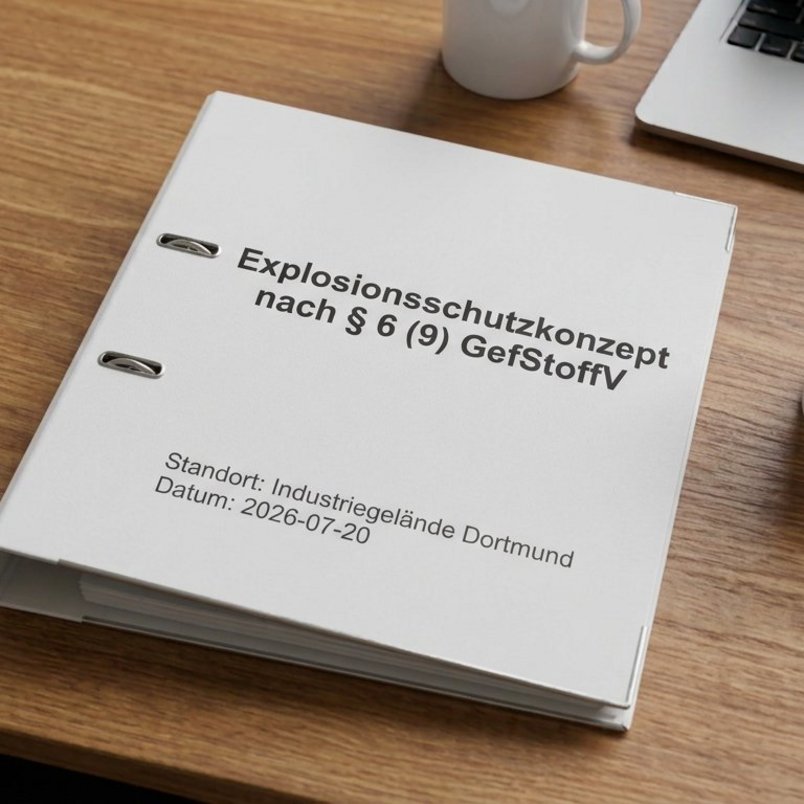
To this end, we draw up explosion protection concepts, provide advice on explosion protection documentation in accordance with Section 6(9) of the GefStoffV, check existing documentation for plausibility, and provide support with new planning, modifications and the rectification of identified defects. We also support manufacturers right from the planning stage with expert advice and robust solutions to ensure safe implementation.

Request advice on explosion protection
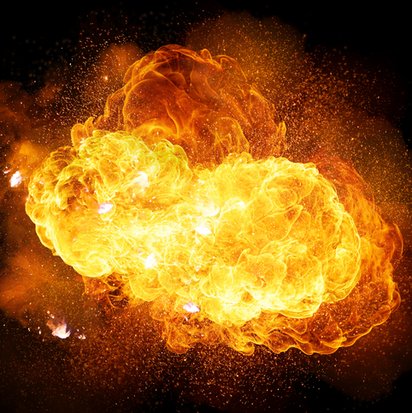
Feurige Explosion mit Funken und Rauch isoliert auf schwarzem Hintergrund

Explosion Protection for Plant Operators

In accordance with the Hazardous Substances Ordinance, the plant operator must specifically identify hazards that may arise from dangerous explosive mixtures and set out the necessary protective measures in an explosion protection document.

At the heart of the explosion protection document lies the explosion protection concept, which sets out the measures required to achieve the objectives. In accordance with technical and legal regulations, we draw up the explosion protection concept based on the information you provide.

If you are already at a more advanced stage in drawing up and optimising your explosion protection concept, we can provide expert advice on implementing the specified protective measures and assist you in preparing the required explosion protection document.

Explosion protection for manufacturers

We support and advise manufacturers as early as the planning stage for future plants with regard to explosion protection, particularly in relation to the development of explosion protection concepts as part of the risk assessment.

Contact

Get in touch with our team of explosion protection experts now

Are you working on a project that requires explosion protection to be factored into the design? Get in touch with us and let’s work together to develop the best approach for your project.

0231 / 5333-430

Our services in the field of explosion protection:

By drawing up a structured and clear explosion protection concept, we assist you with the analysis of explosion hazards, the classification of potentially explosive areas (zones) and the development of hazard-based protective measures. The explosion protection concept serves as a risk assessment in accordance with Section 6(9) of the GefStoffV for the explosion protection document to be drawn up by the operator.

Operators of installations with potentially explosive atmospheres are required to draw up an explosion protection document in accordance with Section 6(9) of the GefStoffV. This document sets out, on the basis of the risk assessment, all measures taken to protect workers from explosion hazards. We can advise you on drawing up the explosion protection document in accordance with Section 6(9) of the GefStoffV and assist you in reviewing, optimising and updating your existing explosion protection document.

We assist you in rectifying, at a conceptual level, any deficiencies identified during the explosion safety assessment in accordance with Annex 2, Section 3, No. 4.1 or 5.1 of the BetrSichV, particularly with regard to the detailing and/or updating of the explosion protection document. We assist with ‘translating’ and mediating in the event of misunderstandings with the inspector and endeavour to develop pragmatic solutions together with you.

We can assist you with specific queries, for example regarding planning applications or building alterations, by providing a statement.

We can assist you with checking the validity and completeness of existing explosion protection concepts and documents, or review older explosion protection documents to determine whether they require amendment, for example due to changes in regulations.

Extensive specialist knowledge is often required to determine which areas of a (planned) plant are relevant in terms of explosion protection, or which documents or information must generally be provided for the preparation of an explosion protection concept or explosion protection document. Particularly in the case of newly planned installations or planned modifications to existing installations, there are often various design options with specific requirements regarding explosion protection, from which the operator must make a selection. We are happy to assist in addressing such issues.

For non-electrical equipment in contact with Zones 2/22 and 1/21, we can assist you with the conceptual assessment of ignition hazards posed by the equipment and the determination of suitable protective measures in accordance with DIN EN ISO 80079-36.

Our references: A selection of clients in the field of explosion protection:

  • NRW Building and Property Management
  • Bernd Münstermann GmbH & Co. KG
  • Brillux GmbH & Co. KG
  • Orion Engineered Carbons GmbH
  • Procter & Gamble Manufacturing GmbH
  • REMONDIS Industrial Services GmbH & Co. KG
  • RWE Technology International GmbH
  • Sasol Germany GmbH
  • Teckentrup GmbH & Co. KG
  • thyssenkrupp Steel Europe AG
  • Vaillant GmbH

What you should know

Frequently asked questions about explosion protection

Explosion protection encompasses all technical and organisational measures designed to prevent the formation of explosive atmospheres or mixtures, to eliminate ignition sources, and to limit the effects of any potential explosions to a non-critical level.

An explosion requires a combustible substance, an oxidising agent – typically air – and an effective ignition source. Unlike a fire, the combustible material is thoroughly mixed with the oxidising agent and is present within its explosion limits, e.g. in the form of a dust or gas cloud.

Explosive mixtures can be formed from any flammable substance if it is finely dispersed:

  • from flammable gases, e.g. natural gas, hydrogen, acetylene, etc.
  • from the vapours or mists of flammable liquids, e.g. petrol, solvents such as ethanol, paints or finely atomised oils.
  • from fine, combustible dusts such as flour, sugar, coal, wood and iron powder.

Operators of installations in which hazardous explosive mixtures may form must draw up an explosion protection document in accordance with Section 6(9) of the Hazardous Substances Ordinance (GefStoffV). This also applies even if, in practice, no hazardous explosive mixtures are actually present because active technical protective measures have been taken to prevent them, e.g. mechanical ventilation. The explosion protection document identifies the hazards and documents all the protective measures taken.

The explosion protection concept is at the heart of the system: it sets out the strategy, zoning and protective measures required to achieve the objectives. The explosion protection document (Section 6(9) of the GefStoffV) summarises the measures actually implemented on the basis of the risk assessment and serves as evidence for regulatory authorities and to protect employees.

We draw up a structured explosion protection concept based on your plant information, carry out the zoning and derive risk-based measures. We also advise on practical implementation, carry out plausibility checks on existing explosion protection concepts or documentation, and optimise and update existing explosion protection documentation.

During the planning stage of future installations, we advise on designs relevant to explosion protection, draw up explosion protection concepts as part of the risk assessment, and thereby ensure planning certainty for subsequent implementation.

The basis for the operator’s assessments regarding explosion protection consists in particular of:

  • the Hazardous Substances Ordinance (GefStoffV, e.g. the explosion protection document pursuant to Section 6(9) of the GefStoffV)
  • the Industrial Safety Ordinance (BetrSichV, in particular the assessment of explosion safety in accordance with Sections 15 and 16 in conjunction with Annex 2, Section 3)
  • the technical rules associated with the regulations (TRGS and TRBS)
  • the regulations of the employers’ liability insurance association, in particular DGUV Rule 113-001

Furthermore, sector-specific regulations, standards or specifications issued by insurers may also be relevant.

The basis for assessments relating to explosion protection for manufacturers of equipment or installations in or for use in potentially explosive atmospheres is provided by:

  • the ATEX Directive 2014/34/EU
  • the Machinery Directive 2006/42/EC until 19 January 2027. From 20 January 2027, the EU Machinery Regulation (EU) 2023/1230 will apply
  • DIN EN 1127-1

Furthermore, additional plant-specific standards and, where applicable, sector-specific regulations are relevant.

  • Kick-off meeting to clarify objectives and constraints
  • Review of data to understand the facilities and the substances handled
  • Site visit, if applicable (where possible and/or necessary)
  • Identification of the necessary measures, including zoning
  • Draft explosion protection concept
  • Coordination with the client
  • Preparation/revision of the explosion protection concept
  • On request, assistance with the preparation of the explosion protection document, support with implementation and inspection in accordance with the Industrial Safety Regulation

These usually include plant and process descriptions, plant flow diagrams (ideally R&I flow diagrams), substance data (safety data sheets) and, where applicable, any existing risk assessments or test reports relating to explosion protection.

  • Kick-off meeting to clarify objectives and constraints
  • Review of data to understand the facilities and the substances handled
  • Site visit, if applicable (where possible and/or necessary)
  • Identification of the necessary measures, including zoning
  • Draft explosion protection concept
  • Consultation with the client
  • Preparation/revision of the explosion protection concept
  • On request, assistance with the preparation of the explosion protection document, support with implementation and inspection in accordance with the Industrial Safety Regulation

For mechanical equipment sold prior to the entry into force of the ATEX Directive 2014/34/EU (1 June 2003), there is generally no formal, written evidence from the manufacturer confirming that the equipment is free from ignition sources. If these older devices are to continue to be operated in contact with potentially explosive atmospheres, we can assist with the conceptual assessment of the ignition hazards posed by the device and the definition of suitable protective measures in accordance with DIN EN ISO 80079‑36.

If hazardous explosive mixtures cannot be safely prevented, areas at risk of explosion are defined as those spatial areas in which such mixtures may occur. Potentially explosive atmospheres are typically classified into zones depending on the probability and duration of the presence of hazardous explosive mixtures (e.g. for gases/vapours: 0/1/2; for dust: 20/21/22). This zoning forms the basis for selecting suitable protective measures to prevent ignition sources, in particular equipment compliant with the ATEX Directive 2014/34/EU.

Yes. We develop pragmatic, regulatory-compliant solutions for rectifying defects and provide support with the detailed planning and updating of the explosion protection document, as well as with communication with inspectors.

Yes. We draw up expert opinions both for authorisation procedures and on specific aspects of explosion protection.

We carry out plausibility checks on the content and completeness of existing explosion protection concepts and documents, and update them where necessary. This service is particularly recommended in preparation for the explosion safety inspection in accordance with Annex 2, Section 3 of the Industrial Safety Regulation. We do not ourselves carry out inspections in accordance with the Industrial Safety Regulation.

Yes. We determine which parts of the plant are relevant in terms of explosion protection, what documentation is required, and which design variants are associated with which requirements, for both new and existing plants.

Explosion protection measures must be implemented in the following order of priority:

  1. Measures to prevent the formation of hazardous explosive mixtures, e.g. ventilation, system integrity or inerting.
  2. Measures to prevent effective ignition sources, e.g. the use of equipment in accordance with the ATEX Directive 2014/34/EU, earthing and equipotential bonding, and lightning protection.
  3. Measures to limit the effects of an explosion to a non-critical level, e.g. explosion-proof construction, explosion pressure relief, explosion suppression, in each case in combination with explosion decoupling.
Fire safety with DMT

Find out more about DMT’s fire safety services: