Specialised Firefighting for Silos and Storage Bunkers
Silo firefighting and inerting for maximum safety
Request advice on specialised fire-fighting for silos and storage bunkers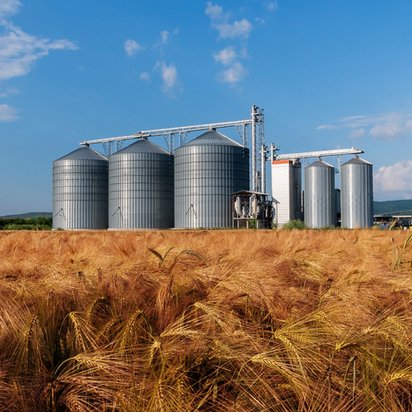
Silo firefighting and inerting for maximum safety
Request advice on specialised fire-fighting for silos and storage bunkersFires in silos and storage bunkers are among the most challenging scenarios in industrial fire protection. These fires are often caused by spontaneous combustion in bulk materials such as coal, biomass, wood pellets, substitute fuels or grain. They frequently originate within the stored material and remain undetected for long periods.
Safely locating the source of the fire, assessing explosion risks and selecting a suitable fire-fighting strategy require specialised measurement technology and extensive experience. DMT supports operators, fire services and incident commanders with independent expertise, state-of-the-art gas and temperature measurement technology, and a proven approach to safe and efficient firefighting.
Fires in silos and bunkers differ significantly from conventional fire incidents. The limited access to the stored material makes it difficult to assess the situation and increases the risks to emergency services personnel.
The use of high-precision gas analysers, oxygen and carbon monoxide detection systems, and high-resolution thermal imaging cameras enables DMT to carry out a risk assessment and precisely pinpoint the location of the fire.
Our experts in specialised firefighting will provide you with expert, solution-focused advice.
Sales Team
+49 231 5333-430
IND7-VID@dmt-group.com
Inerting has established itself as a particularly effective method for combating silo fires and coal bunker fires.
In silo inerting, the oxygen required for combustion is removed from the source of the fire through the controlled introduction of inert gases, such as nitrogen or carbon dioxide. This smothers the fire in a controlled manner whilst significantly reducing the risk of a dust or gas explosion.
The effectiveness of inerting depends largely on the continuous monitoring of oxygen and carbon monoxide concentrations. DMT provides the measurement support and control of the measures to ensure a safe, efficient and sustainable extinguishing outcome.
As well as firefighting, DMT assists companies in developing preventative fire safety strategies.
By combining specialist knowledge, measurement technology and engineering expertise, we provide a sound basis for decision-making for operators and public authorities.
For silo fire emergencies, DMT has set up a telephone number that can be contacted round the clock (24/7).
Silo firefighting encompasses all measures taken to localise, control and extinguish fires in silos and storage tanks. Due to the risk of explosion and limited access, specialised methods such as inerting are required.
During silo inerting, inert gases such as nitrogen or carbon dioxide are introduced into the silo. This reduces the oxygen concentration and halts the combustion process. A prerequisite for successful inerting is the monitoring of the oxygen and carbon monoxide levels in the silo using gas sensors.
Yes. The effectiveness of existing or planned inerting systems can be verified and documented through test flooding and metrological investigations.
Materials at particularly high risk include coal, biomass, wood pellets, substitute fuels, cereals, animal feed and other organic bulk materials subject to biological or chemical spontaneous combustion processes.
Fires in silos often develop unnoticed within the stored material and therefore remain hidden for a long time. At the same time, explosive dust and gas atmospheres can form. The combination of restricted access, high temperatures and potential explosion risks makes firefighting considerably more difficult. Furthermore, thermal stresses can compromise the stability of the silo or bunker structure.
Silo inerting reduces the oxygen content in the silo through the controlled introduction of inert gases such as nitrogen or carbon dioxide. This halts the combustion process and significantly reduces the risk of a dust or gas explosion. At the same time, inertisation creates safe conditions for emergency services and enables controlled and sustainable firefighting.
The duration of silo inerting depends on various factors, in particular the size of the silo, the fill level, the airtightness of the system and the extent of the fire. In many cases, the measures take several days to complete. Continuous monitoring of oxygen, carbon monoxide and temperature levels enables the process to be controlled safely.
Silo firefighting operations must only be carried out by qualified specialists with in-depth knowledge of fire safety, explosion protection, measurement technology and health and safety at work. In practice, fire services often work in collaboration with specialist consultants and service providers to ensure safe and effective firefighting.
Effective preventive fire safety combines technical, organisational and operational measures. These include regular inspections and maintenance, rigorous dust prevention, temperature and gas monitoring systems, and proper stock management in accordance with the first-in, first-out principle. In addition, regular staff training and the review of existing safety plans help to reduce the risk of spontaneous combustion and fires in the long term.