Parceria DMT + Integratio
Plano de fechamento de Mina: Obrigação legal, projeto e engajamento comunitário
Parceria DMT + Integratio
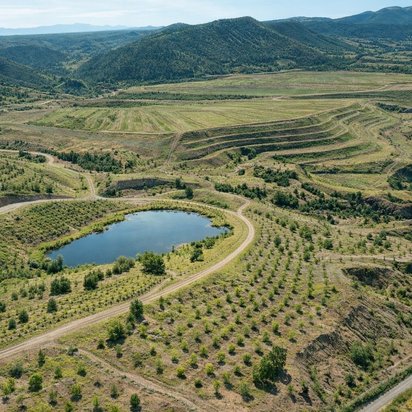
The Mine Closure Plan (PFM) is a set of measures for the decommissioning of mined areas, aimed at environmental restoration, operational safety, and the socioeconomic transition of local communities. More than just a legal requirement, the PFM represents a commitment to the future of the region.
Legal Obligation
The Federal Constitution (1988) stipulates, in Article 225, that those responsible for mineral exploration must restore degraded environments. The Environmental Crimes Law (Law No. 9,605/1998) reinforces this duty by imposing penalties on those who fail to restore areas that have been surveyed or mined. The Mining Code (Decree-Law No. 227/1967), in Article 47-A, as amended by Federal Law No. 14,066/2020, requires the concessionaire to decommission mine structures, repair or compensate for damages resulting from mining activities, and restore the area degraded by such activities, mandating the submission of a Mine Closure Plan (PFM). Federal Decree No. 9,406/2018 reinforces this requirement by linking the submission and implementation of the PFM to the termination of the mining title itself.
What a PFM Should Aim to Achieve:
From its conceptual phase onward, the PFM must consider the following objectives:
Protection of environmental quality;
Even before drafting the Mine Closure Plan (PFM), it is essential that the Plan’s rapporteur consider the opinions of various stakeholders: residents living near the mine, nearby communities, local NGOs, representatives of traditional communities, government and professional organizations, as well as employees and contractors. This process of listening enhances the quality of planning, reduces risks, and strengthens dialogue for future phases.
The social dimension and land management in the Mine Closure Plan
In a Mine Closure Plan (MCP), the success of the socioeconomic transition and the mitigation of social risks depend on continuous and strategic land management. The relationships built with communities throughout the project’s life cycle are just as crucial as the technical decommissioning activities. Therefore, it is recommended that stakeholder relations be treated as a strategic priority, capable of promoting predictability and transparency. To ensure that the PFM is developed based on up-to-date information and community expectations, the mining company uses social management tools that go beyond a one-time assessment. The periodic maintenance and updating of these tools help prevent social surprises at a sensitive time, anticipate conflicts, reduce reputational risks, and inform decisions with real data, ensuring a legacy aligned with the needs and expectations of the local community.
Social tools are organized into three pillars essential to the effectiveness of the PFM:
1. Detailed Understanding of the Territory
The foundational tools provide an in-depth analysis of local dynamics, serving as the foundation for all decisions regarding mine closure:
Socioeconomic Census and Assessment: These are vital for the detailed characterization of families, local stakeholders, and living conditions within the area of influence. Conducted at strategic points throughout the mine’s life cycle, they enable the documentation of current conditions, the identification of social changes, the mapping of vulnerabilities, and the assessment of the municipality’s socioeconomic resilience in the face of mine closure. The information generated supports impact mitigation planning and the development of actions to support the post-mining transition.
2. Engagement, Communication, and Predictability
This pillar focuses on building dialogue and trust, elements that are indispensable for maintaining social acceptance during a sensitive phase such as the pre-closure and closure phases themselves:
3. Strengthening Municipal Capacity and Resilience
The focus of this pillar is to ensure that the region has the capacity to thrive in the post-mining era, reducing its dependence on mining:
Municipal Support and Strengthening Program (PAFOM): This is a strategic tool aimed at institutional strengthening, economic diversification, and preparing municipalities for transition scenarios. Its implementation supports local governments in building the capacity to address, through planning and resilience, the socioeconomic effects of the closure of mining operations. PAFOM is structured around complementary pillars, such as institutional support, supplier development, training of the local workforce, and strategic planning, ensuring concrete pathways for continued socioeconomic development after mining ceases.
What the PFM Must Include
ANM Resolution No. 68/2021 established rules regarding the PFM, including the elements that must be addressed by the Plan and the frequency of revisions and/or updates based on the phase of the mining process. The table below lists the topics that must be addressed by the Plan according to the phase of the mining process.
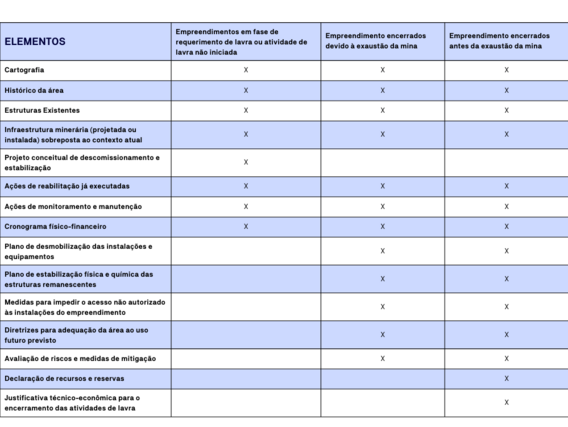
Table 1: Elements that should be included in the PFM according to the phase of the mining process
CARTOGRAPHY
The cartography of the area should be presented in a way that characterizes the hydrography, geology, topography, land use and land cover, restricted areas and municipal boundaries, local communities, vegetation, and conservation areas, as well as the project’s location and access routes; it should also present the project and all its structures within the area’s current context.
For the PFM to achieve a truly integrated—technical, environmental, and social—view of the territory, the rigor of technical cartography must be complemented by Social Cartography. Although technical cartography is indispensable for accurately representing physical and structural aspects, it does not fully capture the perceptions, uses, and meanings attributed to the space by local communities.
Social Cartography is a participatory tool that incorporates the perspectives of the people who live in and attribute meaning to the territory. It highlights symbolic uses, routines, conflicts, memories, and dynamics that would rarely appear on conventional maps.
Its development involves methodologies such as participatory workshops, reconnaissance walks, and dialogues with community groups. These activities make it possible to identify, for example, areas of traditional use (such as fishing and recreation), places perceived as sensitive or of sentimental value, and everyday routes, which are often distinct from those recorded on official maps.
By combining the geospatial precision of technical cartography with the sociocultural depth of Social Cartography, a more comprehensive map that more accurately reflects local reality is created. This approach helps ensure that the mining operation is planned in a way that is sensitive to how the territory is used and perceived, reducing the risk of conflict and strengthening dialogue with communities.
PROJECT AND AREA CHARACTERIZATION
The project must be presented, including a description of: the mineral to be mined, production, mining and processing methods, waste rock/tailings disposal facilities, the physical and chemical characteristics of these materials, and temporary support structures. These planned facilities must be presented on a map, at an appropriate scale, overlaid on the current state of the area.
To understand the area, the impacts resulting from the activity, and the potential suitability for future use, a characterization of the area must be conducted at both the regional and local levels. At the regional level, the economy, population dynamics, climate, vegetation, and hydrography must be analyzed. Locally, the following should be analyzed: land use and land cover, geology, hydrography, territorial boundaries, the existence of protected areas, topographic features, the presence of population centers, and other characteristics deemed important for the area and/or project.
In addition to these, the history of the project area should be documented, taking into account the existence of other projects and land use patterns.
The closure plan’s timeline must be clearly outlined in the project. The ideal time to close a mine is when the ore deposits are exhausted. However, other factors—such as falling prices and market changes, accidents or operational incidents, extreme environmental events, changes in government policy, and administrative decisions—can lead to the suspension of the project or its premature closure, and the company must be prepared for this. In the event of a suspension of activities, the ANM and the environmental agency must be duly notified, as must the resumption of activities.
DECOMMISSIONING PROJECT
At this stage, the actions for decommissioning temporary and remaining structures must be described, including measures for the physical and chemical stabilization of tailings piles, pits, and dams.
Measures such as the restoration of native vegetation through reforestation and other techniques must be presented.
SOCIAL INITIATIVES DURING DECOMMISSIONING
Decommissioning is a decisive stage in the life cycle of a project, marked by operational changes and the visibility of interventions in the local area. For this transition to be carried out in a planned and socially legitimate manner, technical and environmental actions must be accompanied by a robust and transparent social strategy.
The primary objective of the social initiative is to ensure that the community understands the closure process and is clear about its effects on the local area. In this regard, it is essential that social initiatives be planned in advance and aligned with local dynamics, fostering trust, reducing uncertainty, and contributing to a more stable process.
To support this phase, the company must draw on information compiled throughout the project’s lifecycle, derived from socioeconomic assessments, territorial mapping, and other social monitoring tools. The use of up-to-date data ensures that decommissioning decisions are aligned with the community’s current perceptions and priorities.
The Municipal Support and Strengthening Program (PAFOM) plays a leading role at this stage. By strengthening institutional capacities, diversifying the local economy, expanding income-generation opportunities, and supporting productive arrangements, PAFOM increases the social and economic resilience of municipalities in the face of reduced mining activities. Regions with more robust economies and well-prepared institutions tend to cope with mine closures less abruptly, ensuring continuity and adaptation in the post-mining era.
ACCESSIBILITY
The PFM must provide for access control to the area in order to prevent accidents involving people and animals and to ensure the integrity of the property. Therefore, the Plan must outline how this access control will be implemented, particularly in areas that pose a danger due to their condition or depth, which must be fenced off, marked with signs, or monitored. In addition to human access, consideration must also be given to the access of unwanted animals—such as domestic animals—to the area during the reclamation process.
FUTURE USE
Since mining is a form of temporary land use, consideration must be given to new ways of utilizing the area occupied by the activity; in other words, the closure plan must ensure that the area previously occupied by the activity can be put to new use. Consideration must be given to the restrictions imposed by the changes that have occurred, the area’s suitability, current legislation, community expectations, local and regional land use, zoning, watershed plans, costs, benefits, advantages, and disadvantages, as well as the associated risks.
The definition of the area’s new future use, as discussed, must incorporate community expectations as a strategic factor, alongside technical, environmental, and legal constraints. Communities develop legitimate expectations regarding the territory’s future, which are shaped by the company’s presence, perceived benefits, and—crucially—the economic dependence that many municipalities have on mining.
To ensure that the future land-use plan is aligned with local needs and potential, ongoing social work—supported by solid and up-to-date assessments—is essential. Tools such as the Socioeconomic Registry, Perception Surveys, and Social Cartography enable an understanding of the territory in its social, economic, cultural, and symbolic dimensions.
In general, communities have expectations related to:
The continuity of municipal benefits, services, and investments;
Job opportunities, income, and training in the post-mining period;
Environmental safety and guarantees of restoration for affected areas;
Clear information about new land use.
Understanding and monitoring these expectations is essential for the project to adjust its social programs, strengthen relationships, and achieve a closure that is accepted by the population.
In this context, the Municipal Support and Strengthening Program (PAFOM) stands out as a key pillar for supporting socioeconomic transition and economic diversification. By promoting institutional coordination and supporting the development of new production chains and the local workforce, PAFOM directly works to reduce dependence on mining. This consistent implementation over the years ensures that, by the time of closure, the region already has concrete results in place for its new economic and social use, guaranteeing a more balanced and resilient transition.
Continuous monitoring of perceptions, territorial dynamics, and socioeconomic indicators is essential for the closure to be perceived as a responsible, planned, and predictable process.
ENVIRONMENTAL MONITORING AND CONTROL MEASURES
The main monitoring and maintenance activities planned for the area should be described, taking into account the project’s characteristics and the expected environmental impacts. If the PFM involves a project that has already been licensed, the environmental studies will have already defined the impacts of this phase and the corresponding control measures. However, it is important to review and assess whether the proposed measures are still appropriate for the project’s current context and the new technologies available on the market.
Certain monitoring activities—such as monitoring of surface water and effluent quality, air emissions, noise generation, geotechnical monitoring of structures, and wildlife monitoring—are expected for this type of project. Some expected control measures include the installation of effluent treatment systems, surface runoff drainage systems, the restoration of degraded areas, and the reintroduction of vegetation.
Pre-Closure: Anticipation and Planning
This phase is ideal for initiating structured dialogues with communities, community leaders, and government officials. The pre-closure phase is the time to present the process, its timelines, and potential effects on the local area. It is also a crucial period for reviewing social assessments and planning specific measures aimed at mitigating impacts on the most vulnerable groups, such as local workers or families directly dependent on mining activities.
2. During Closure: Transparency and Stability
As decommissioning progresses, communication must remain clear, continuous, and transparent, translating technical information into accessible language. Close engagement with the community, prompt responses to emerging questions, and frequent updates on community perceptions are essential for reducing tensions, thereby fostering predictability and legitimacy in the process.
3. Post-Closure: Consolidation and Monitoring
After operational closure, the company must continue social monitoring to verify the effectiveness of the actions implemented and track socioeconomic indicators in the region. This monitoring guides necessary adjustments and contributes to the consolidation of a balanced and sustainable transition, especially in municipalities with limited prior economic diversification.
SOCIAL MONITORING: A GUIDING PRINCIPLE OF THE PROCESS
Social monitoring is a decision-support tool that must be ongoing and integrated into all three phases, enabling the project to:
Systematically track community perceptions, identifying changes and emerging needs.
Map residual social impacts and risks of discontinuity, enabling rapid responses and adjustments to strategies.
Provide reliable information for the review and improvement of the PAFOM and sectoral plans.
Ensure alignment between the PFM proposals, local expectations, and realities, strengthening the social legitimacy of the mine closure.
PHYSICAL–FINANCIAL TIMELINE
The costs associated with mine closure must be assessed so that these figures can be incorporated into the project’s economic feasibility analyses, for financial provisioning, and to establish the organization’s financial and accounting commitment to the cessation of operations. Therefore, the costs of programs and actions related to closure—including social programs, land reclamation, and environmental monitoring—must be estimated, and these costs must be distributed over the years so that they align with cash flow.
In addition, a timeline must be presented for carrying out the proposed activities and programs, taking into account the pre-closure, closure, and post-closure phases.
When to Update the PFM
According to ANM Resolution No. 68/2021, the PFM must be updated every 5 years or whenever the PAE is updated, reflecting any changes that have occurred at the mine during that period.
If the closure date is approaching, a new PFM must be submitted two years prior to closure. And if operations are terminated before the ore is exhausted, an updated PFM must be submitted.
CONCLUSION
The development and implementation of a Mine Closure Plan require the ability to integrate technical, environmental, operational, and social aspects into a single, coherent, and transparent process. When engineering and social management work in a complementary and coordinated manner, the project enhances its safety, reduces the risk of conflict, and strengthens the legitimacy of each stage of the closure process.
It is based on this integrated vision that the partnership between DMT Engenharia and Integratio Mediação Social offers strategic support. Together, the companies combine technical rigor, local sensitivity, and strategic vision to support projects in developing structured, efficient, and socially recognized closure plans.
For companies seeking to align regulatory requirements, community expectations, and transition strategies—or those in the process of reviewing, developing, or implementing their Mine Closure Plan (MCP)—technical dialogue is essential.
Contact the DMT and Integratio teams to discuss specific challenges and possible paths toward a safe, comprehensive mine closure that is prepared for the territory’s future.