Brazil’s geography contributes to an abundance of mineral resources, but it also poses significant logistical challenges due to the country’s continental size and predominantly rugged topography:
For this reason, mineral logistics are strategic to the sector’s competitiveness, both in the domestic market and for exports.

2.1 Ferrovia: o gigante da mineração brasileira
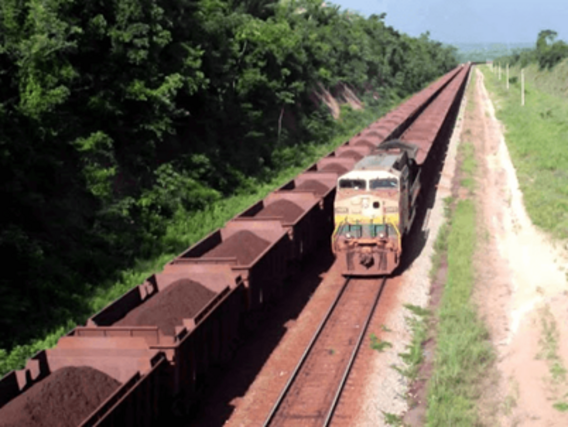
Rail is the primary mode of mineral transport in Brazil. Large volumes, long distances, and low cost per metric ton make rail the ideal choice for cargo such as iron ore, bauxite, coal, and manganese.
Major mineral railroads:
Advantages:
- Lower logistics costs than road transport
- High cargo capacity
- Lower CO₂ emissions per metric ton transported
- Greater safety and operational predictability
Challenges:

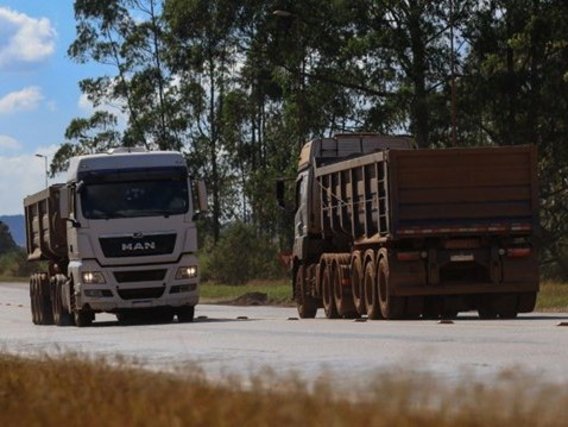
Despite the high cost, road transport is still widely used in the mining industry, especially for:
- Connecting the mine to the railroad, the port, or the end consumer
- Transporting industrial minerals and fertilizers
- Transporting output from smaller-scale mining operations
Disadvantages:
- High cost per metric ton-kilometer
- Significant environmental impact, particularly high carbon dioxide (CO₂) emissions, as diesel-powered trucks rely heavily on fossil fuels. Road transport is one of the largest emitters of greenhouse gases in the logistics sector, contributing significantly to global warming.
- Traffic congestion and road wear and tear
- Poorly maintained roads near cities—increased accidents and cargo losses

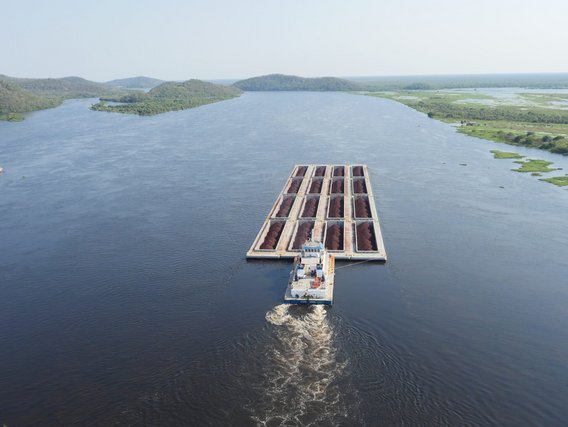
In Brazil, waterway transportation of minerals is underutilized or virtually nonexistent, despite the immense potential of navigable rivers:
- Tapajós River (PA) and Tocantins River (PA): under evaluation for mineral transportation
- São Francisco River: already used on an ad hoc basis
- Paraguay River: transport of iron ore from the Corumbá region (MS)
Advantages:
- Low operating costs
- Reduced CO₂ emissions
- High capacity per river convoy
Limitations:
- Lack of ports and locks—numerous hydroelectric dams have reduced the navigability of the rivers, requiring engineering works (locks)
- Seasonal navigation
- Low or virtually no investment in waterway infrastructure

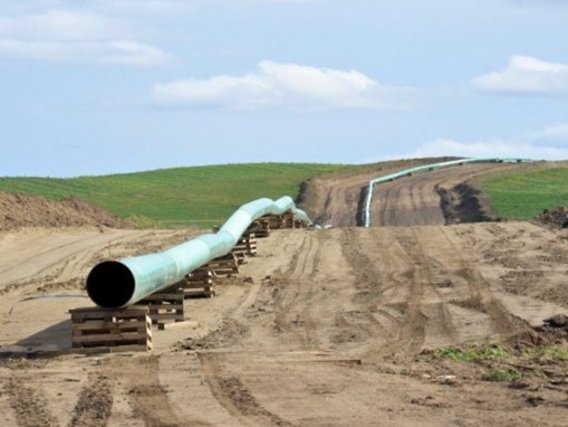
Mineral slurry pipelines are long-distance pipelines used to transport mineral slurry (a mixture of ore and water).
Examples:
- Minas-Rio (Anglo American) – 529 km from Conceição do Mato Dentro (MG) to the Port of Açu (RJ)
- Samarco – pipelines between Mariana (MG) and Ubu (ES) – approximately 400 km in length.
Advantages:
- Continuous transport
- Low visual and noise impact
- Low operating costs
- Reduced need for road transport
Disadvantages:

Mineral logistics in Brazil are characterized by complex, intermodal corridors that connect mines in the country’s interior to ocean ports geared toward exports. Each logistics chain is shaped by the geographic location of the deposit, the type of ore, the volume of production, and the infrastructure that is either already in place or developed on demand.
In this section, we highlight some of the key logistics success stories in the Brazilian mining sector, which illustrate different combinations of modes of transport and strategies. Take a look:
Vale – S11D Project (PA–MA)
Ore: Iron
Location: Canaã dos Carajás (PA) to São Luís (MA)
Logistics route length: ~972 km
Primary mode of transport: Conveyor belts + rail
Port: Ponta da Madeira (São Luís – MA)
The S11D Eliezer Batista is the largest mining project in Vale’s history. It began operations in 2016, after nearly a decade of studies and investments exceeding US$14 billion. The mine uses conveyor belts instead of trucks, reducing CO₂ emissions. Rail transport is handled by the Carajás Railway (EFC), also operated by Vale, which was modernized to handle the new cargo flow.
Anglo American – Minas-Rio System (MG–RJ)
Ore: Iron (pellet feed)
Location: Conceição do Mato Dentro (MG) to the Port of Açu (RJ)
Logistics length: 529 km
Predominant mode: Slurry pipeline
Port: Açu Port Terminal (São João da Barra – RJ)
Operated by Anglo American, the Minas-Rio System began operations in 2014 and is one of the largest slurry pipelines in the world. The total investment exceeded US$8 billion. The pipeline crosses 32 municipalities, transporting iron ore slurry to the coast. Its construction faced environmental, technical, and legal challenges, but today it serves as a global benchmark for long-distance mineral logistics with low road traffic impact.
CBMM – Niobium in Araxá (MG)
Ore: Niobium
Location: Araxá (MG) to the Port of Santos (SP)
Logistics distance: ~800 km
Primary mode of transport: Highway + railroad
Port: Port of Santos (SP)
CBMM (Companhia Brasileira de Metalurgia e Mineração) operates the world’s leading niobium mine in Araxá (MG). The concentrate is transported by highway to Uberaba and, from there, loaded onto the VLI (formerly FCA) rail network bound for the port. The company has been in operation since the 1960s, but its current logistics infrastructure was consolidated between the 1990s and 2000s, with a focus on exports.
Despite the mineral sector’s importance to the Brazilian economy and the progress made in large-scale logistics projects, the mineral transport chain still faces significant structural obstacles. These bottlenecks directly impact logistics costs, the international competitiveness of mineral commodities, and the ability to respond to new markets and environmental demands.
Below, we list the main obstacles that hinder the smooth flow of logistics in the Brazilian mining sector—from the source at the deposits to the export ports:
- A fragmented and poorly distributed rail network
- Excessive reliance on road transport
- Congested ports with low mineral handling capacity (competition with the agricultural sector)
- Poor multimodal connectivity (rail-port-waterway)
- Customs bureaucracy and lack of efficiency in exports
- Limited traceability in the logistics chain
- Lack of public investment in mineral logistics infrastructure
Faced with structural bottlenecks and growing demands for efficiency, sustainability, and traceability, the Brazilian mineral logistics sector has a fertile ground for innovation and modernization ahead of it. The adoption of new technologies, modal diversification, the advancement of public-private partnerships, and alignment with ESG practices are paving the way for a more resilient and competitive future.
The main strategic areas driving the evolution of mineral logistics in Brazil include:
Smart Intermodality
- Integration of rail, road, and waterways to reduce costs and emissions
Sustainable logistics
- Low-emission modes of transport, electric trucks, carbon offsetting
Digitization and automation
- IoT-based monitoring, real-time tracking, AI for predictability
Public-private partnerships (PPPs)
- Railroad concessions, incentives for shared logistics and the use of waterways


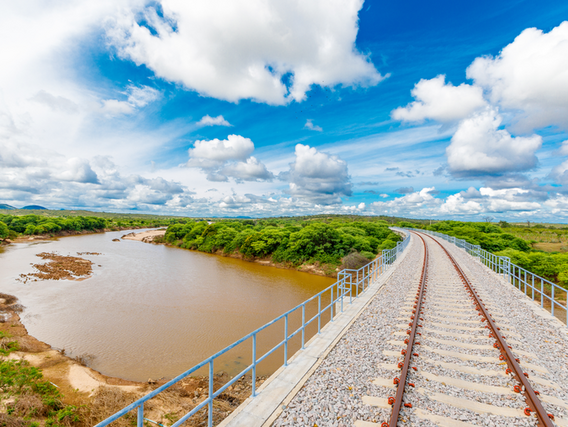
The West-East Integration Railway (FIOL) is one of Brazil’s most ambitious mineral logistics infrastructure projects. Its goal is to connect areas with significant mineral potential in the interior of Bahia to the coast, providing an efficient and competitive rail transport corridor for iron ore and other cargo.
Project Characteristics
Bahia Mineração (BAMIN) took over the FIOL 1 concession in 2021, with commercial operations expected to begin by 2027. This segment is strategic for transporting iron ore mined in Caetité, one of Bahia’s largest iron ore reserves. According to the Federal Court of Accounts, the project is currently undergoing a reassessment after BAMIN suspended construction and terminated the contract for the segment between Uruçuca and Ilhéus, despite having already made significant investments in the project.
In light of this standstill and the project’s underperformance, the federal government has established a working group to analyze the contract’s status and determine the next steps to ensure the railway’s continuity. Meanwhile, the concessionaire is limiting its activities to maintenance and compliance with social and environmental obligations, leaving the future of the section dependent on the decisions that will be made following this assessment.
Mineral logistics is the backbone of the Brazilian mining industry. Without it, there are no exports, no competitiveness, and no growth. Transporting minerals efficiently, safely, and sustainably is just as important as extracting them. In Brazil, this challenge is magnified by long distances, a poorly distributed rail network, and a heavy reliance on highways.
Even so, there are signs of progress. Investments in interconnected railways, new logistics corridors, and more sustainable routes are already underway. Projects in the North region, for example, aim to connect production areas to river ports, opening strategic pathways to the Asian market. Digitalization is also beginning to transform the logistics chain: real-time tracking, predictive analytics, and automation reduce losses and optimize routes.
Other mining nations offer inspiring models. Australia and Canada have invested in mining-specific logistics, with dedicated railways, automated ports, and efficient intermodal transport. As a result, they have reduced costs, emissions, and risks, becoming global leaders in mineral supply.
Brazil has the resources, demand, and technical capacity to follow this path. To do so, it needs to accelerate infrastructure projects, reduce red tape, and encourage public-private partnerships. Logistics will be the key differentiator in the new mining industry: connected, sustainable, and prepared to compete in an increasingly demanding global market.