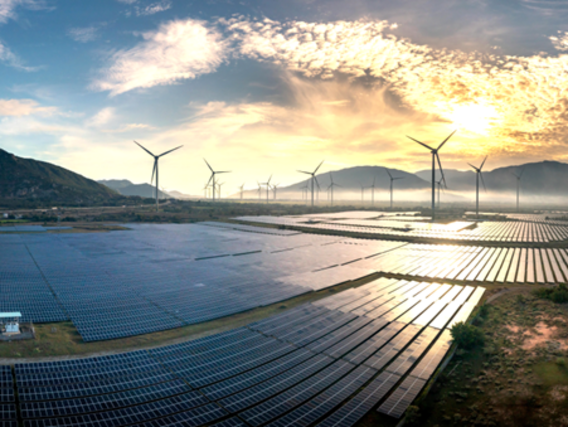
The world is undergoing one of the greatest structural transformations in its economic history: the gradual replacement of fossil fuels with clean energy sources. This transition is not merely an environmental issue; it is a reconfiguration of global supply chains, investment flows, and power relations among nations.
Alongside this transformation lies an element often invisible to the general public: minerals. Unlike past energy transitions, which relied primarily on capital and engineering, the current one is intensive in specific, critical, and geographically concentrated materials. Without them, there are no batteries for electric vehicles, no wind turbines, no semiconductors, and no artificial intelligence. In this context, Brazil occupies a unique position on the global geopolitical stage.
Below, we explore why these resources are so central to this transformation and how they shape these new dynamics.
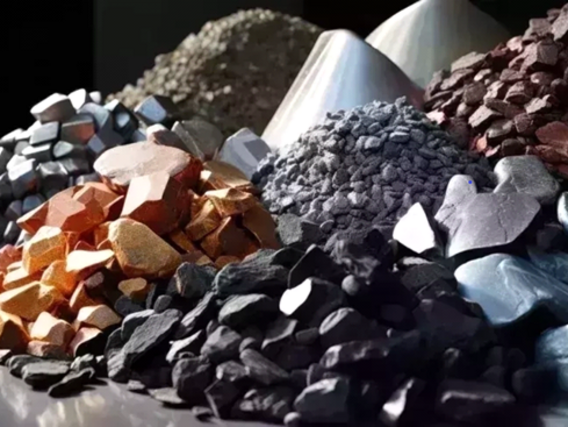
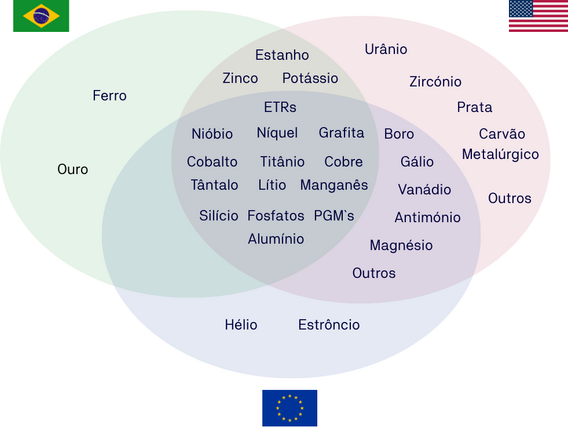
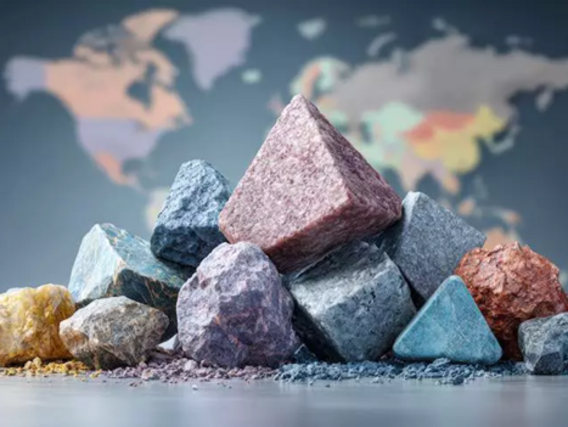
Critical minerals are essential resources for strategic sectors such as energy, technology, and defense, whose supply chains pose significant risks, whether due to geological scarcity or the concentration of production in a few countries.
Among the most relevant examples are niobium and rare earth elements (REEs). These materials perform specific and often irreplaceable functions in a variety of applications:
• Electric vehicle batteries and large-scale energy storage systems;
• High-power permanent magnets in wind turbines and electric motors;
• Semiconductors, solar panels, and advanced electronic components;
Defense systems, aeronautics, and communications infrastructure.
Their critical importance stems from two main factors: their growing significance in enabling low-carbon technologies and the vulnerability of their supply chains, which are often concentrated in just a few countries and subject to political and commercial instability. This importance is formalized through official lists compiled by sectoral and government agencies, such as the list of Strategic Minerals from the Brazilian Institute of Mining (IBRAM), the National Mining Agency (ANM), and the Ministry of Mines and Energy (MME) in Brazil, as well as the European Union’s (EU) list of Critical Raw Materials, which periodically reviews which elements are vital to global economic and technological security. Thus, more than just inputs in

Demand for critical minerals has been growing significantly, driven by climate goals and public policies aimed at decarbonization. Countries and economic blocs have been adopting strategies to reduce greenhouse gas emissions, which implies a significant expansion in the use of technologies that rely heavily on these resources.
According to the International Energy Agency (IEA), in a decarbonization scenario aligned with the Paris Agreement, demand for critical minerals could grow by a factor of 4 to 6 by 2040, depending on the mineral.
This trend is occurring alongside growing concerns about supply chain security. Heavy reliance on a small number of suppliers—especially in the case of rare earth elements, where China accounts for more than 60% of global production—exposes economies to significant geopolitical and commercial risks.
In response, the United States and the European Union have sought to diversify their supply sources, encourage domestic production, and forge partnerships with countries that possess significant mineral resources and a stable institutional environment. It is in this context that international interest in Brazil is intensifying.
Although often used interchangeably, the concepts of critical minerals and strategic minerals are not identical and deserve to be distinguished:
• Critical minerals are defined from a global perspective, taking into account their economic importance for the energy transition and the risks associated with their supply. They are critical to the world.
• Strategic minerals are those that a country considers essential to its national interests, taking into account industrial development, economic security, and geopolitical positioning. They are strategic for those who possess them.
In Brazil’s case, rare earth elements and niobium fall into both categories simultaneously. They are critical on the international stage; the world needs them to make the energy transition and the ongoing technological revolution feasible. And, with proper planning and consistent policies, they can become pillars of a new-generation national industrial development strategy.
The world’s view of Brazil today is not limited to commodities. It seeks the security necessary to build the future of technology and energy amid growing instability in global supply chains.

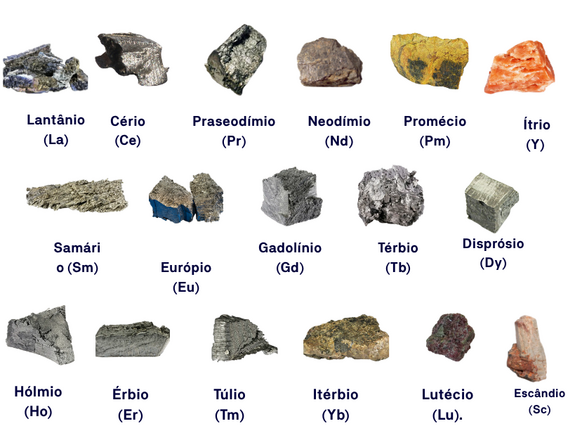
This is a group of 17 chemical elements, including neodymium (Nd), praseodymium (Pr), dysprosium (Dy), and terbium (Tb), with unique magnetic, luminescent, and catalytic properties that are essential for a wide range of high-performance technologies.

• Electric mobility: A single electric vehicle motor can contain up to 2 kg of rare-earth permanent magnets (NdFeB). With hundreds of millions of electric vehicles projected over the coming decades, demand for these elements is expected to grow exponentially.
• Wind Energy: Large wind turbines with permanent magnet generators use between 200 kg and 2 metric tons of rare earths per unit, depending on installed capacity.
• High-Performance Semiconductors and Chips: Rare earth elements are essential in the manufacture of ceramic capacitors and integrated circuit components that reduce energy loss and heat generated during the processing of large volumes of data.
• Defense and aerospace: Radars, guidance systems, military communications, and night vision equipment rely directly on rare earth elements.
To gain a deeper understanding of what rare earth elements are, their characteristics, and their applications, check out the full content on rare earth elements on our website.

Brazil holds a prominent global position in rare earths. According to the USGS, the country has approximately 21 to 22 Mt of rare earth oxide (REO) reserves, making it the second-largest holder of global reserves, behind only China. The National Mining Agency (ANM) reported 11.4 Mt of proven and probable reserves, keeping Brazil in second place in the USGS’s global ranking for 2025.
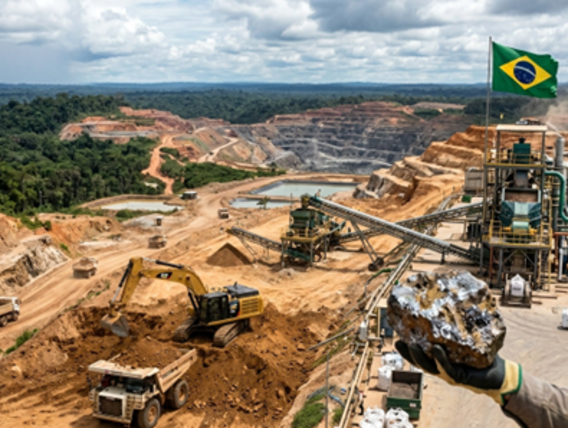
Currently, the country has only one mine in operation—the Serra Verde Project (in Pela Ema, GO), operated by Serra Verde Pesquisa e Mineração—but it has dozens of deposits in the exploration phase, including the Caldeira project (by Meteoric Resources) and the Colossus project (by Viridis Mining and Minerals), both located on the Poços de Caldas Plateau (MG), and the Carina Project (by Aclara Resources) in Goiás.
Brazil’s main challenge in the rare earth sector lies not in extraction, but in the chemical processing required to separate the elements—a complex, high-value-added stage still dominated by China. Overcoming this technological barrier is essential for the country to capture real value in this supply chain.

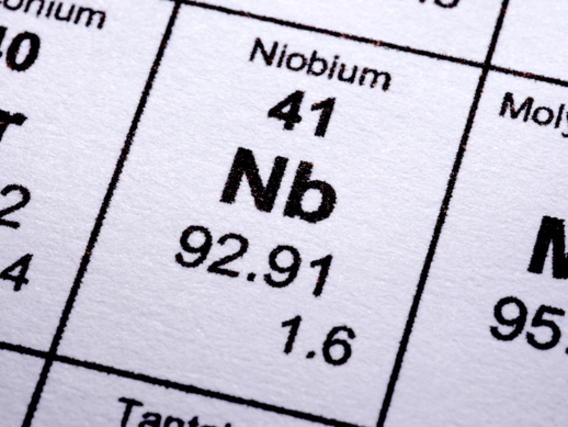
Brazil holds a dominant position in the global niobium market. According to data from the Geological Survey of Brazil (SGB) and the U.S. Geological Survey (USGS), the country accounts for approximately 90% of global production and holds about 94% of the metal’s known reserves, establishing itself as the world’s leading supplier of niobium.
The applications of niobium are vast and strategic, based on its unique ability to impart strength and lightness to metal alloys. They are found in the steel, aerospace, healthcare, and energy sectors.
Among its various applications, in the steel industry, the addition of small amounts of this metal (ferroniobium) transforms ordinary steel into High-Strength Low-Alloy (HSLA) steels, which are essential for the construction of bridges, overpasses, and gas pipelines that must withstand extreme conditions. The aerospace industry uses niobium in vacuum-grade superalloys for aircraft turbine components and rocket nozzles, due to its extremely high melting point and thermal resistance. Recently, niobium oxide has also revolutionized the battery market, enabling ultra-fast charging in less than 10 minutes and increasing the lifespan and safety of electric vehicles.

The main production centers
Brazilian production is concentrated in two major mining districts:
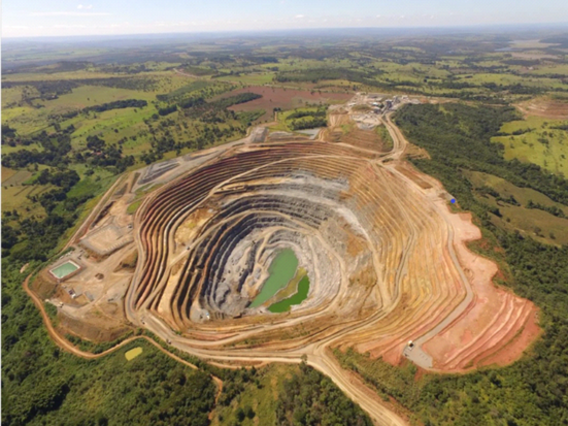
• Araxá (MG) - CBMM: This is the main operation and the cornerstone of global supply. The Araxá mine has estimated reserves of 395.6 Mt of ore with an average grade of 1.49% Nb, making it the largest niobium operation on the planet.
• Catalão (GO) - CMOC Brasil: In 2024, the company reported record production of 10,024 metric tons of niobium, establishing itself as the world’s second-largest producer and accounting for approximately 11% of global output.
In 2023, Brazil produced 105,821 metric tons of contained niobium, led by Minas Gerais with 90,372 metric tons (85%) and Goiás with 15,449 metric tons (15%), according to the SGB.

The Geopolitics of Niobium
Brazil’s dominant position in niobium did not go unnoticed by global powers. In 2010, U.S. diplomatic documents released by WikiLeaks revealed that the U.S. State Department viewed access to Brazilian niobium as a strategic issue for the country’s national security, even amid ample supply and without any threat of a supply disruption.
The international perception of the mineral’s strategic value soon translated into concrete market moves. In 2011, a consortium of Chinese, Japanese, and South Korean companies acquired a 30% stake in CBMM—the world’s largest niobium producer, headquartered in Araxá (MG)—for $4 billion. The transaction demonstrated that the interest was not purely commercial: the goal was to secure access to a resource with no viable substitutes in various high-performance industrial applications.
CBMM, however, retained operational control of the company and did not relinquish its proprietary processing method—an industrial secret comprising fifteen internally developed stages. This technological expertise is what sets Brazil apart from mere ore exporters: the country exports processed niobium, capturing added value throughout the production chain.
This model—abundant reserves combined with technological expertise in processing—is precisely what Brazil needs to replicate in the rare earths sector to consolidate its leading role in today’s mineral economy.
Brazil is facing a historic window of opportunity. International demand for its minerals is expected to grow steadily over the coming decades, creating room for export expansion, attracting investment, and developing new production chains. However, this potential comes with structural challenges that must be addressed:
Vertical Integration and Value Addition
The central risk is that Brazil will remain an exporter of raw materials, failing to capture value in subsequent industrial stages. CBMM’s model for niobium—which holds technological dominance in processing—should serve as a benchmark for rare earth elements (REEs). Industrial policies that encourage the domestic separation and refining of REEs are crucial for meaningful integration into global supply chains.
Infrastructure and Logistics
The expansion of mineral production into regions such as Pará and Rondônia requires substantial investments in transportation and energy infrastructure. Without this logistical foundation, geological potential will not translate into competitive production capacity or economic returns for the producing regions.
Sustainability and ESG Standards
The mining of these resources must comply with environmental, social, and governance (ESG) standards. Markets such as those in Europe and North America are adopting increasingly stringent due diligence criteria for mineral supply chains. Access to these markets will depend directly on Brazil’s ability to demonstrate responsible and traceable practices.
Regulatory Environment
The efficiency and predictability of the regulatory environment for licensing and mining concessions are critical factors in attracting long-term investment. Progress in this area is essential for the country to capitalize on its geological advantage in a sustainable and competitive manner.

The growing global interest in critical minerals is a direct result of the ongoing technological transformations.
Niobium and rare earth elements have come to occupy a strategic position in the context of the energy transition and the global quest for security in the supply of critical minerals.
Brazil possesses unique comparative advantages: dominance in global niobium reserves and production, world-class rare earth reserves, and a proven track record of technological capability in mining. Transforming these advantages into effective leadership, however, will require much more than geological wealth; it will require industrialization, governance, infrastructure, and a long-term strategic vision.
The window of opportunity is open. What will determine whether Brazil positions itself as a commodity supplier or as a central player in the mineral economy of the current century is, fundamentally, a choice of industrial policy and national development.
Do you need to apply this to your project?
References
AGÊNCIA NACIONAL DE MINERAÇÃO. Anuário Mineral Brasileiro 2023: ano base 2022. Brasília, DF: ANM, 2023.
BRASIL MINERAL. Demanda mundial deve quadruplicar até 2040. [S. l.], 2024. Disponível em: https://www.brasilmineral.com.br/noticias/demanda-mundial-deve-quadruplicar-ate-2040. Acesso em: 28 abr. 2026.
BRASIL MINERAL. CMOC bate recorde de produção no Brasil em 2024. [S. l.], 2024. Disponível em: https://www.brasilmineral.com.br/noticias/cmoc-bate-recorde-de-producao-no-brasil-em-2024. Acesso em: 28 abr. 2026.
CBMM. Relatórios institucionais e informações públicas 2023–2024. Araxá: CBMM, 2024.
CMOC BRASIL. Relatório de Produção 2024. Catalão/Ouvidor: CMOC, 2024.
DMT GROUP. Terras Raras ou ETRs: panorama e potencial. [S. l.]: DMT, [202-?].
INSTITUTO BRASILEIRO DE MINERAÇÃO. Relatórios setoriais: informações sobre a economia mineral brasileira. Brasília, DF: IBRAM, 2024.
INTERNATIONAL ENERGY AGENCY. The Role of Critical Minerals in Clean Energy Transitions: world energy outlook special report. Paris: IEA, 2021 (updated 2023).
SERVIÇO GEOLÓGICO DO BRASIL. Brazilian Mineral Summary 2024. Editores: [Nomes se houver]. Brasília, DF: SGB/CPRM, 2024. v. 1. Capítulos 9.12 (Niobium) e 9.16 (Rare Earth Elements).
SERVIÇO GEOLÓGICO DO BRASIL. An overview of critical and strategic minerals potential of Brazil: 2026 edition. Brasília, DF: SGB/CPRM, 2026.
U.S. GEOLOGICAL SURVEY. Mineral Commodity Summaries 2024. Reston, VA: USGS, 2024.
U.S. GEOLOGICAL SURVEY. Mineral Commodity Summaries 2025. Reston, VA: USGS, 2025.